Recovery depends on more than waiting for pain to disappear. You need to protect the injured area, follow weight-bearing and movement limits, attend fracture follow up, support healing with food and nicotine cessation, and recognise symptoms that need urgent review.
Key takeaways
- Protect the fracture before adding movement, weight or sports.
- Keep casts and splints dry, clean and supported as instructed.
- Attend follow-up visits so examination and X-rays guide each recovery stage.
- Seek urgent review for worsening pain, numbness, colour change or fever.
The Recovery Timeline: From Emergency Treatment to Normal Activity
Expect fracture recovery after trauma to move from protection, to controlled movement, to restored strength—not straight from a cast to sport. The exact pace depends on the bone, displacement, treatment, age and health; your fracture team uses pain, examination and X-rays to set each advance.
- Emergency treatment: clinicians check circulation, nerves and skin, take imaging, then realign the bone with reduction or surgery when needed. A splint, cast or fixation protects it afterward.
- First days to weeks: control swelling, protect the wound or cast, and move only the joints and muscles your instructions allow. Do not add weight-bearing yourself.
- Following weeks: repeat examination and X-rays decide whether to increase weight-bearing, physiotherapy and range of motion. An X-ray can still look incomplete while the fracture is clinically stable; pain, instability or lost function can show that progress is unsafe.
- Work and driving: return to desk work when pain is controlled and you can travel safely; heavy work waits for reliable strength and permitted loading. Drive only when you are out of a distracting immobiliser, can operate every control and perform an emergency stop; check your doctor, insurer and local rules.
- Sport: begin with walking and strengthening, then impact and sport-specific drills after medical clearance. Competition comes last, when movement, strength, balance and confidence match the uninjured side.
Increasing pain, new deformity, drainage, fever or reduced function needs prompt review. Severe escalating pain with tense swelling, numbness or weakness is an emergency during trauma injury recovery.
Your Daily Cast, Splint and Wound-Care Checklist
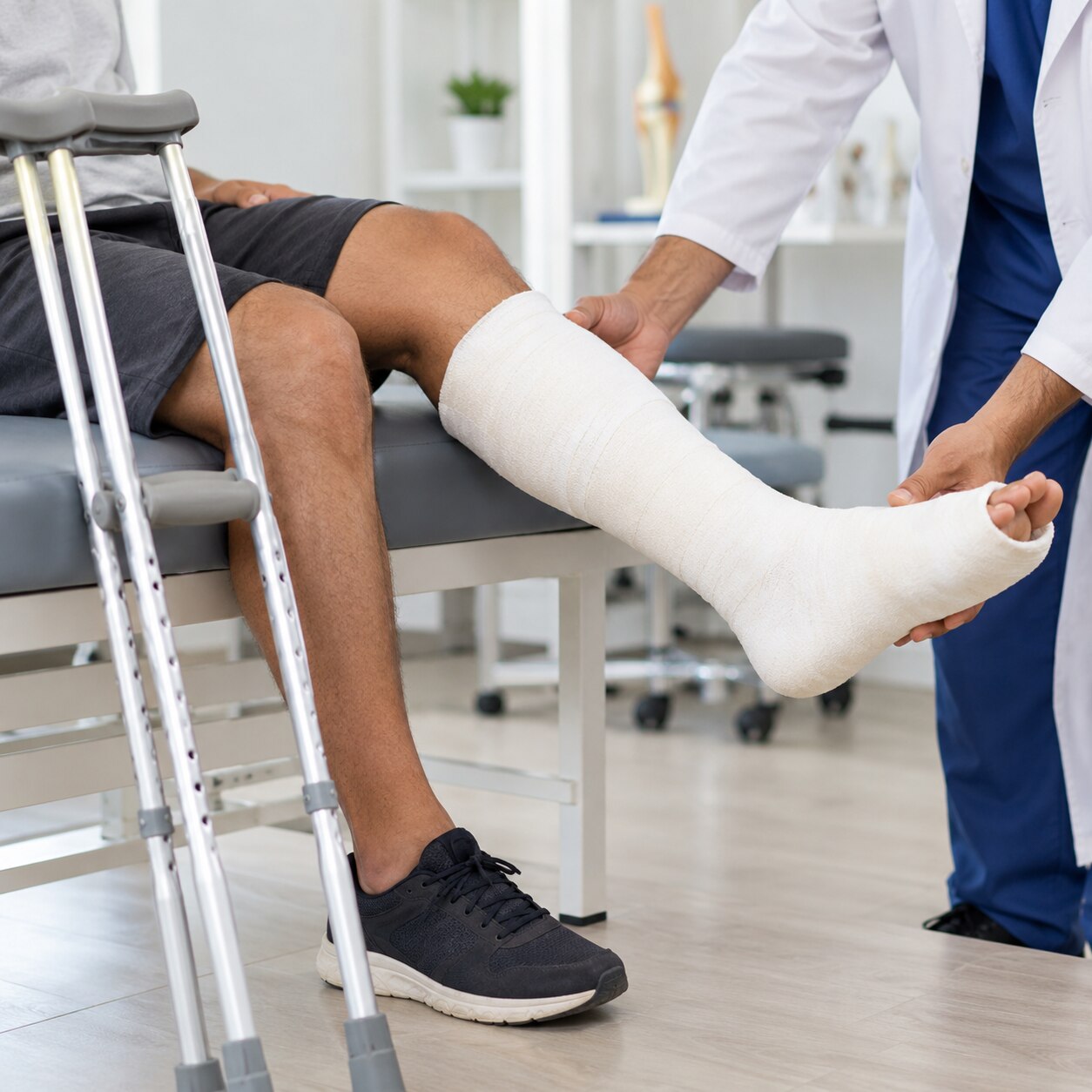
Keep the cast or splint dry, supported and unchanged each day. Wash your hands before touching a surgical dressing, and replace it only as instructed. Check skin around the edges, toes or fingers for increasing swelling, colour change, numbness, coldness or pressure.
- Elevate the injured limb above heart level when resting, especially during the first days.
- Move the fingers or toes gently if your clinician permits it; do not test weight-bearing or walking beyond the written restriction.
- Cover the cast or splint with a waterproof barrier for bathing. Never soak it.
- Keep the wound dressing clean and dry, and do not apply creams, powders or antiseptic inside it.
- Use pillows to prevent pressure on the cast while sleeping; during transport, support the limb and follow your weight-bearing restriction.
| Action | Safe choice | Harmful choice |
|---|---|---|
| Bathing | Waterproof cover and brief shower | Soaking, swimming or directing water at the wound |
| Itching or pressure | Ask the treating team for relief | Inserting pens, sticks or wires |
| Fit or dressing | Return for adjustment or follow instructions | Cutting, loosening or changing the cast or splint yourself |
An open fracture needs emergency hospital management: cover it with a sterile dressing and do not probe or deeply clean the wound. Seek urgent care for escalating severe pain, tense swelling, weakness, altered sensation, fever, pus, or blue or cold fingers or toes. These are essential fracture recovery care steps.
Pain Medicine, Food and Nicotine: Practical Healing Support
Take prescribed pain relief exactly as labelled. A scheduled dose is taken at set times to prevent pain from building; an as-needed dose is taken when pain breaks through. Do not double the next dose after missing one—check the label or call a pharmacist.
Avoid alcohol and unapproved sedatives with opioid medicine, and ask about driving. Tell the prescriber about stomach ulcers, kidney disease, blood thinners, or other medicines before using an anti-inflammatory drug.
Build fracture healing support into ordinary meals:
- Protein: include eggs, milk, yogurt, fish, chicken, beans, lentils, tofu or paneer at meals.
- Calories: eat enough total food to prevent unplanned weight loss.
- Calcium: use dairy or calcium-fortified alternatives, tofu, beans or leafy greens.
- Vitamin D: ask whether testing or a supplement is appropriate; avoid high-dose products without clinical advice.
- Hydration: drink regularly, unless a kidney, heart or fluid restriction applies.
Smoking reduces blood supply and raises the risk of delayed union, nonunion, infection and poorer surgical outcomes. Stop smoking, and tell your treating team about vaping or nicotine-replacement products.
Pain that persists beyond the expected early period, increases, or returns after activity needs review. Contact the fracture team if it occurs with fever, drainage, deformity or loss of function.
What Follow-Up Visits and X-Rays Decide
Improving pain is not clearance to increase activity. During fracture follow up, examination checks tenderness, swelling, movement, circulation, sensation, wound healing, cast or splint fit, and stability. A fracture can feel better while alignment has shifted.
Repeat X-rays show alignment, callus formation, joint involvement and hardware position. An incompletely healed fracture may be clinically stable, while an aligned image cannot explain new instability, worsening function or severe pain. The treating team decides whether your fracture recovery after trauma is ready for the next stage; do not advance weight-bearing alone.
Before changing any restriction, ask:
- What does today’s examination and X-ray show about alignment and healing?
- Which limb movements and how much weight can I use now: none, touch-down, partial or full?
- Should physiotherapy start or progress, and which exercises, lifting limits or impact must I avoid?
- When can I safely return to my specific job, drive, cycle, run or play sport, and what test must I pass first?
- When is the next review, and which symptom means I should contact you sooner?
At a fracture follow up with Dr.A.K.Sharma-Ortho & joint replacement surgeon, take your previous X-rays and a written list of current activities. New deformity, loss of function, increasing pain, drainage, fever, numbness or weakness needs prompt medical advice rather than waiting for routine imaging.
Related service
Expert Fracture and Trauma Care Specialized Treatment from Top Orthopaedic Surgeons in Noida and Delhi NCR Welcome to our Fracture and Trauma Care... View service → |
Warning Signs That Need Immediate Medical Review
Do not wait for the next appointment if pain is rapidly worsening, uncontrolled by prescribed medicine, or suddenly returns after activity. A cast or splint that feels dangerously tight, or fingers or toes that become numb, cold, pale, blue, swollen, or difficult to move, can signal impaired circulation, nerve compression, or compartment syndrome.
Contact emergency services or go to the emergency department immediately.
| Symptom | Possible complication | Contact |
|---|---|---|
| Increasing tightness, severe pain, numbness, cold or blue digits | Circulation loss, nerve compression or compartment syndrome | Emergency department now |
| Fever, spreading redness, warmth, pus, foul drainage or wound opening | Infection, especially after surgery or an open fracture | Fracture team urgently; emergency department if severe |
| One-sided calf or thigh swelling, warmth or pain | Deep-vein thrombosis | Same-day medical review |
| Sudden breathlessness, chest pain, coughing blood, faintness or rapid heartbeat | Pulmonary embolism | Emergency services immediately |
| New deformity, grinding, instability, loss of movement or function | Loss of alignment, hardware trouble or a new injury | Fracture team urgently |
An open wound over a fracture needs emergency hospital treatment; cover it with a sterile dressing and do not probe or deeply clean it. During trauma injury recovery, report persistent or increasing pain rather than extending pain medicine yourself.
Fracture recovery care depends on examination and imaging, so contact the treating fracture team before increasing weight-bearing or activity.
When a Fracture Signals a Wider Bone-Health Problem
A fracture after a fall from standing height or another minor impact, particularly after age 50, warrants a bone-health review even when treatment succeeds. Ask whether you need an osteoporosis assessment, because the injury may signal weak bone rather than bad luck alone.
Include these steps in fracture recovery care:
- Arrange a DXA bone-density scan and review previous fractures, steroid use, family history and other osteoporosis risks.
- Request a falls-risk review if balance, vision, strength, footwear, medicines or home hazards contributed to the fall.
- Check vitamin D and blood calcium when intake is poor, malabsorption, kidney disease or suspected deficiency is present. Ask before taking high-dose supplements.
- Discuss medication to prevent another fracture when osteoporosis or a fragility fracture indicates it. Food and fracture-healing support help recovery but cannot replace stable treatment or prescribed bone protection.
Frequently asked questions
How long does fracture recovery after trauma take?
Recovery moves from protection to controlled movement and then strength restoration. Timing depends on the bone, displacement, treatment, age and overall health, so your fracture team should set activity milestones using examination, pain and X-rays.
How should I care for a cast or splint each day?
Keep the cast or splint dry, clean and intact. Check the skin around its edges, support the injured limb as instructed and follow the prescribed limits on movement or weight-bearing. Do not insert objects under a cast to scratch.
What warning signs need immediate fracture follow-up?
Seek immediate medical review for worsening or uncontrolled pain, new numbness or weakness, pale or blue fingers or toes, increasing swelling, a damaged or tight cast, fever, foul drainage or an opening wound.
What do follow-up visits and X-rays decide?
The clinician checks pain, swelling, skin, circulation, nerve function and movement. X-rays show whether the fracture position is maintained and whether healing supports the next step, such as continued protection, controlled motion or increased weight-bearing.
When can a fracture indicate a wider bone-health problem?
Ask about bone-health assessment when a fracture followed a low-impact fall, occurred repeatedly, or happened with little force. Your clinician may review medicines, nutrition, activity, hormonal factors and tests for conditions that weaken bone.
Keywords