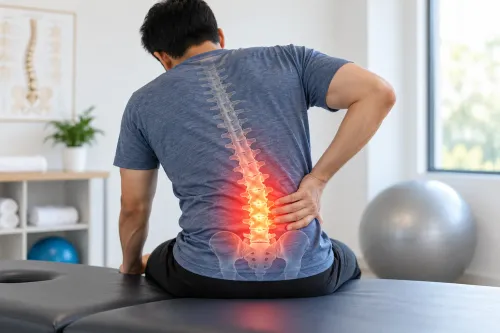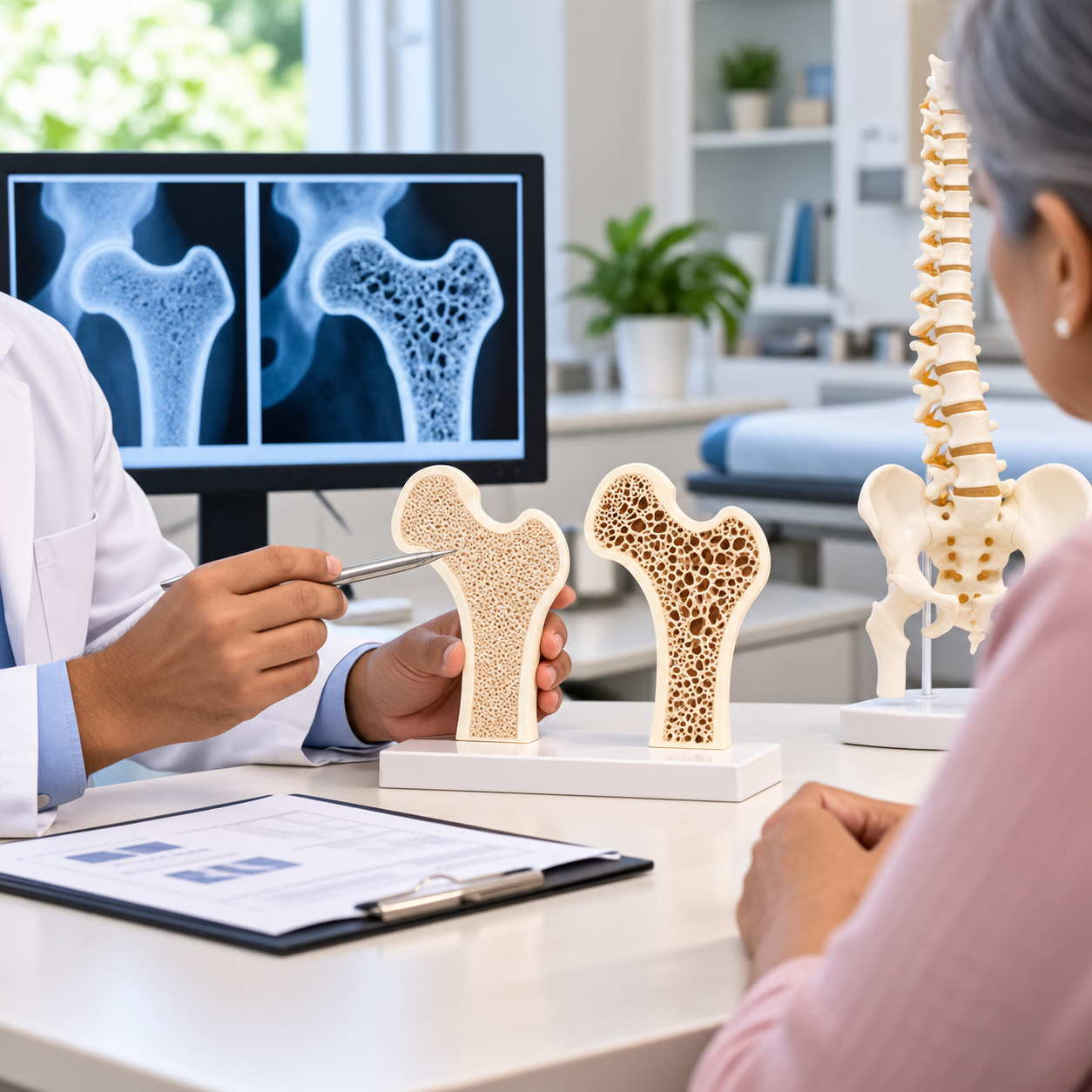
Osteoporosis often develops silently. Many people do not realize their bones have weakened until a fracture occurs after a minor fall.
For older adults in Noida, osteoporosis treatment should focus on more than bone-density numbers. It should include fracture-risk assessment, nutrition, appropriate exercise, fall prevention, medication when indicated, and follow-up.
What Is Osteoporosis?
Osteoporosis is a condition in which bone strength decreases.
This can increase the risk of fractures, particularly in the:
- Hip
- Spine
- Wrist
Some spinal fractures may occur with relatively minor stress.
Who May Be at Higher Risk?
Risk can be influenced by:
- Increasing age
- Previous low-trauma fracture
- Family history
- Low body weight
- Certain medications
- Hormonal changes
- Reduced physical activity
- Smoking
- Excessive alcohol use
- Certain medical conditions
Risk assessment should consider the whole patient.
How Is Osteoporosis Diagnosed?
Bone-density testing may be recommended in suitable patients.
The doctor may also review:
- Fracture history
- Medication use
- Medical conditions
- Nutritional factors
- Blood test findings
Bone density is only one part of fracture-risk evaluation.
What Can Treatment Include?
Management may involve:
- Calcium intake
- Vitamin D
- Appropriate exercise
- Fall prevention
- Osteoporosis medication
- Management of contributing medical conditions
Medication choice should be individualized.
Why Is Exercise Important?
Suitable exercise can help maintain:
- Muscle strength
- Balance
- Mobility
- Independence
However, people with established osteoporosis or vertebral fractures may need specific modifications.
Reduce Fall Risk at Home
Simple measures can reduce avoidable falls.
Consider:
- Removing loose rugs
- Improving lighting
- Using stable footwear
- Keeping floors clutter-free
- Adding bathroom support where needed
- Reviewing vision problems
- Addressing balance issues
What Does a Low-Trauma Fracture Mean?
A fracture after a minor fall can sometimes be an important warning sign.
It may suggest reduced bone strength and should prompt discussion about future fracture prevention.
When Is Orthopedic Assessment Needed?
Orthopedic assessment may be useful after:
- Hip fracture
- Wrist fracture
- Vertebral fracture
- Persistent pain after a fall
- Reduced mobility
- Suspected compression fracture
Dr. A.K. Sharma, Ortho and Joint Replacement Surgeon evaluates fracture-related orthopedic problems in Noida and can help determine whether further bone-health assessment is appropriate.
Osteoporosis care works best when treatment focuses not only on current bone weakness but also on reducing future fracture risk and supporting safe, independent movement.
Keywords