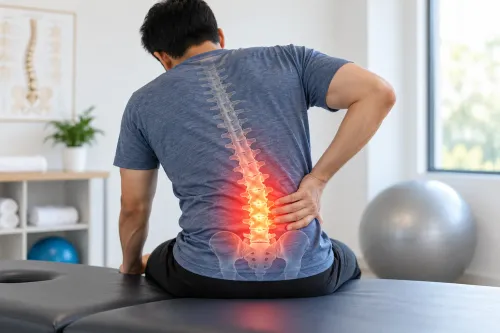
Neck pain often begins as stiffness or discomfort after prolonged desk work, driving, or mobile phone use. In other cases, the pain may travel toward the shoulder, arm, or fingers.
Because these symptom patterns can indicate different problems, cervical pain treatment should begin with proper assessment rather than a one-size-fits-all exercise routine.
What Causes Cervical Pain?
Possible causes include:
- Muscle strain
- Degenerative changes
- Cervical disc problems
- Facet joint irritation
- Nerve compression
- Previous injury
- Poor movement habits
- Certain spinal conditions
Pain may remain local or involve neurological symptoms.
Local Pain Versus Nerve Pain
Local cervical pain usually affects the neck and nearby shoulder muscles.
Nerve-related symptoms may include:
- Pain travelling down the arm
- Tingling
- Numbness
- Burning
- Weak grip
- Muscle weakness
These symptoms need closer evaluation.
How Does an Orthopedic Assessment Help?
The surgeon may assess:
- Neck movement
- Muscle tenderness
- Arm strength
- Reflexes
- Sensation
- Grip
- Pain pattern
The findings help determine whether symptoms are mainly muscular, joint-related, disc-related, or neurological.
Is Imaging Always Required?
No.
Mild neck pain without concerning neurological symptoms may not require immediate advanced imaging.
X-rays or MRI may be considered when symptoms persist or when nerve involvement is suspected.
What Can Conservative Treatment Include?
Depending on the diagnosis:
- Medication
- Physiotherapy
- Ergonomic changes
- Mobility exercises
- Strengthening
- Activity modification
- Temporary reduction of aggravating movements
Long-term complete rest is usually not the goal for routine mechanical neck pain.
Common Mistakes to Avoid
Patients often make several mistakes.
Ignoring Arm Weakness
Weakness can be more significant than pain.
Performing Aggressive Exercises
Exercises should match the diagnosis.
Repeated Forceful Neck Manipulation
This should not replace clinical assessment.
Wearing a Collar Indefinitely
Long-term unsupervised collar use is not a universal solution.
Treating the MRI Instead of the Patient
Scan findings need to match symptoms.
When Might Surgery Be Discussed?
Surgical assessment may become relevant when there is significant nerve compression, progressive weakness, instability, or persistent disabling symptoms that correlate with structural findings.
Most cervical pain does not automatically require surgery.
What to Bring to Consultation
Patients should bring:
- Previous MRI or X-rays
- Prescriptions
- Medication list
- Details of previous treatment
- Notes about symptom triggers
Dr. A.K. Sharma, Ortho and Joint Replacement Surgeon evaluates cervical and musculoskeletal conditions for patients in Noida, Uttar Pradesh.
The most useful cervical pain treatment plan is one that addresses the specific cause of symptoms, especially when arm pain, numbness, or weakness is present.
Keywords