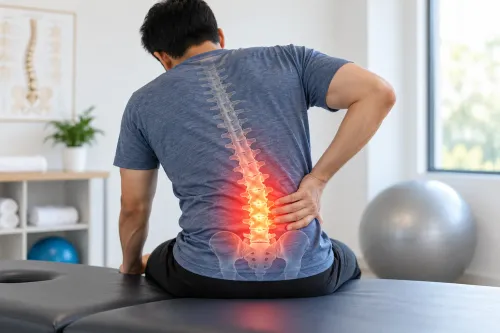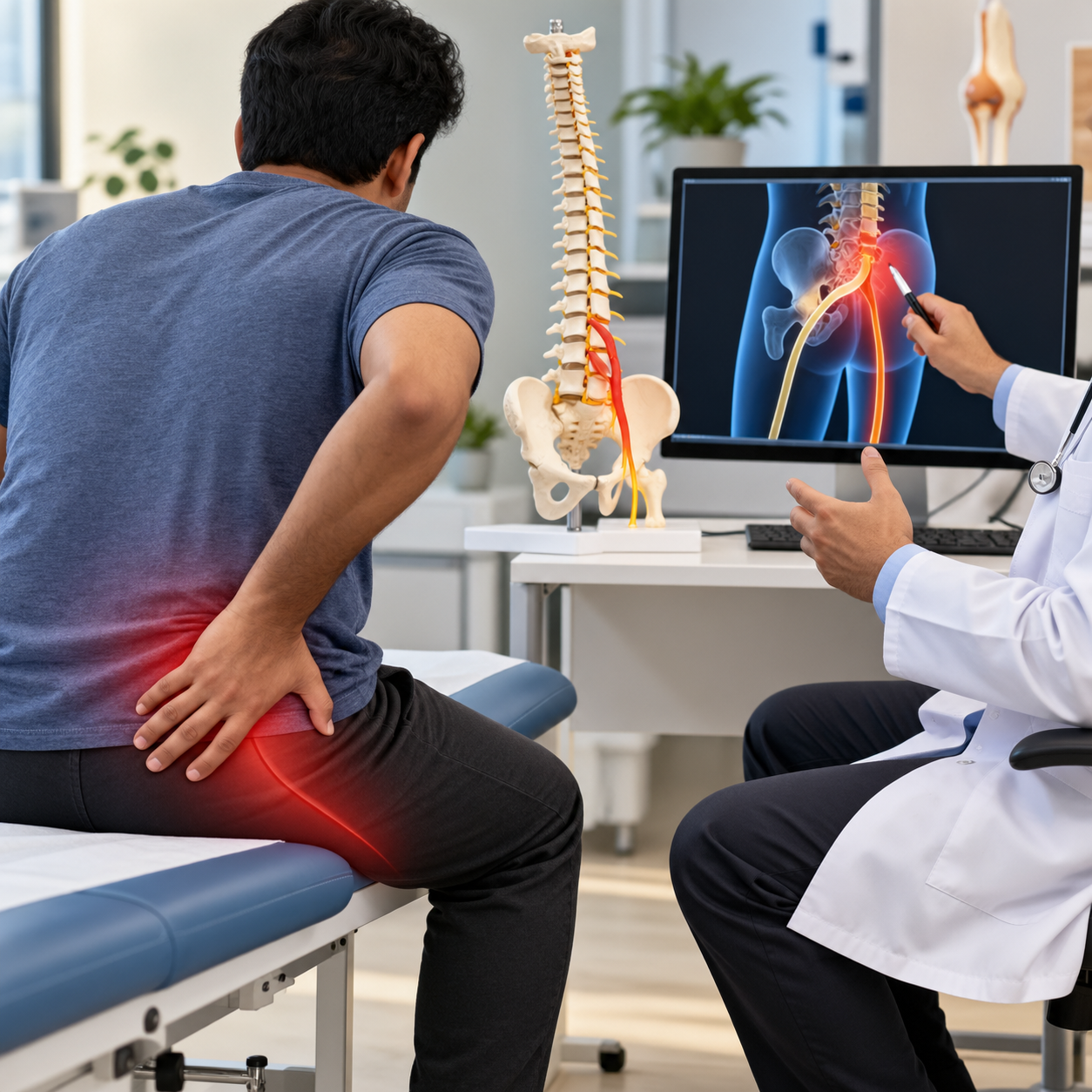
Sciatica can feel very different from ordinary back pain. Instead of remaining in the lower back, discomfort may travel into the buttock, thigh, calf, or foot.
For patients searching for sciatica pain treatment, the key step is determining what is irritating or compressing the nerve.
What Does Sciatica Feel Like?
Common symptoms include:
- Radiating leg pain
- Burning sensation
- Tingling
- Numbness
- Electric-shock-like pain
- Leg weakness
Symptoms may worsen with sitting, bending, coughing, or certain movements.
What Causes Sciatica?
Possible causes include:
- Lumbar disc herniation
- Degenerative spinal changes
- Spinal stenosis
- Bone-related changes
- Other causes of nerve compression
An orthopedic assessment helps establish which structure is involved.
Do All Patients Need MRI?
No.
Imaging is usually selected based on symptoms, examination findings, severity, duration, and neurological signs.
MRI may be useful when nerve compression needs closer evaluation.
What Does Conservative Treatment Involve?
When there are no urgent neurological concerns, treatment may include:
- Medication
- Activity modification
- Physiotherapy
- Mobility exercises
- Gradual strengthening
- Return to normal activity
Complete bed rest for long periods is not usually the goal.
When Does Sciatica Become More Concerning?
Medical evaluation is particularly important when patients develop:
- Progressive weakness
- Severe numbness
- Difficulty walking
- Loss of bladder or bowel control
- Saddle-area numbness
Certain neurological symptoms require urgent assessment.
How Long Does Recovery Take?
Recovery depends on the cause.
Some patients improve over several weeks with conservative care.
Others with persistent compression or significant neurological findings may need further treatment.
Comparing recovery timelines with another patient is often misleading.
When Might Surgery Be Considered?
Surgery may be discussed when:
- There is progressive weakness
- Significant nerve compression is confirmed
- Symptoms remain disabling
- Conservative treatment fails in an appropriate case
- Neurological function is threatened
The surgical decision should be based on both clinical findings and imaging.
What Should Patients Track?
Before consultation, note:
- Where pain starts
- Where it travels
- Whether numbness is present
- Any weakness
- What movements trigger symptoms
- How long symptoms have lasted
For patients in Noida and nearby Delhi NCR areas, Dr. A.K. Sharma, Ortho and Joint Replacement Surgeon can assess whether leg pain is related to nerve compression and determine the appropriate treatment pathway.
Sciatica management should focus on nerve function and the underlying cause, not simply on reducing pain temporarily.
Keywords