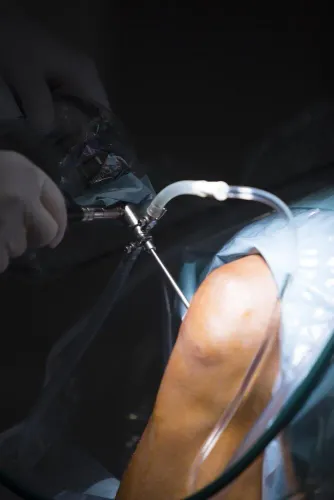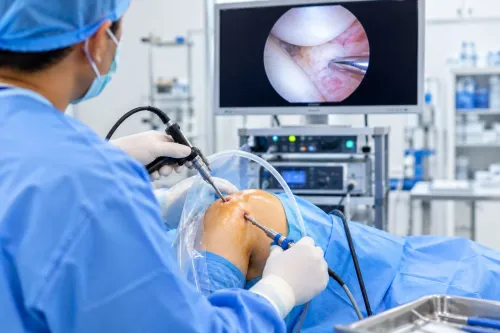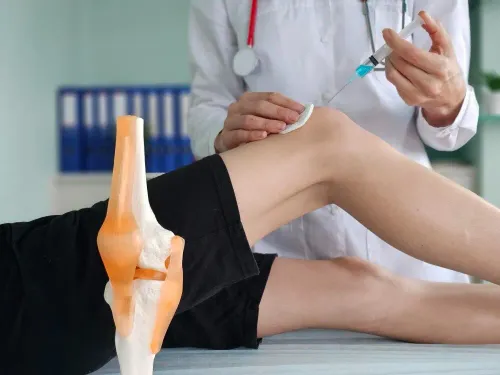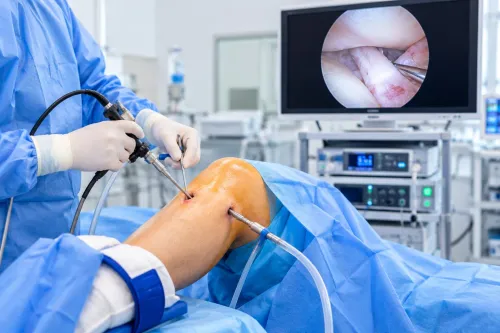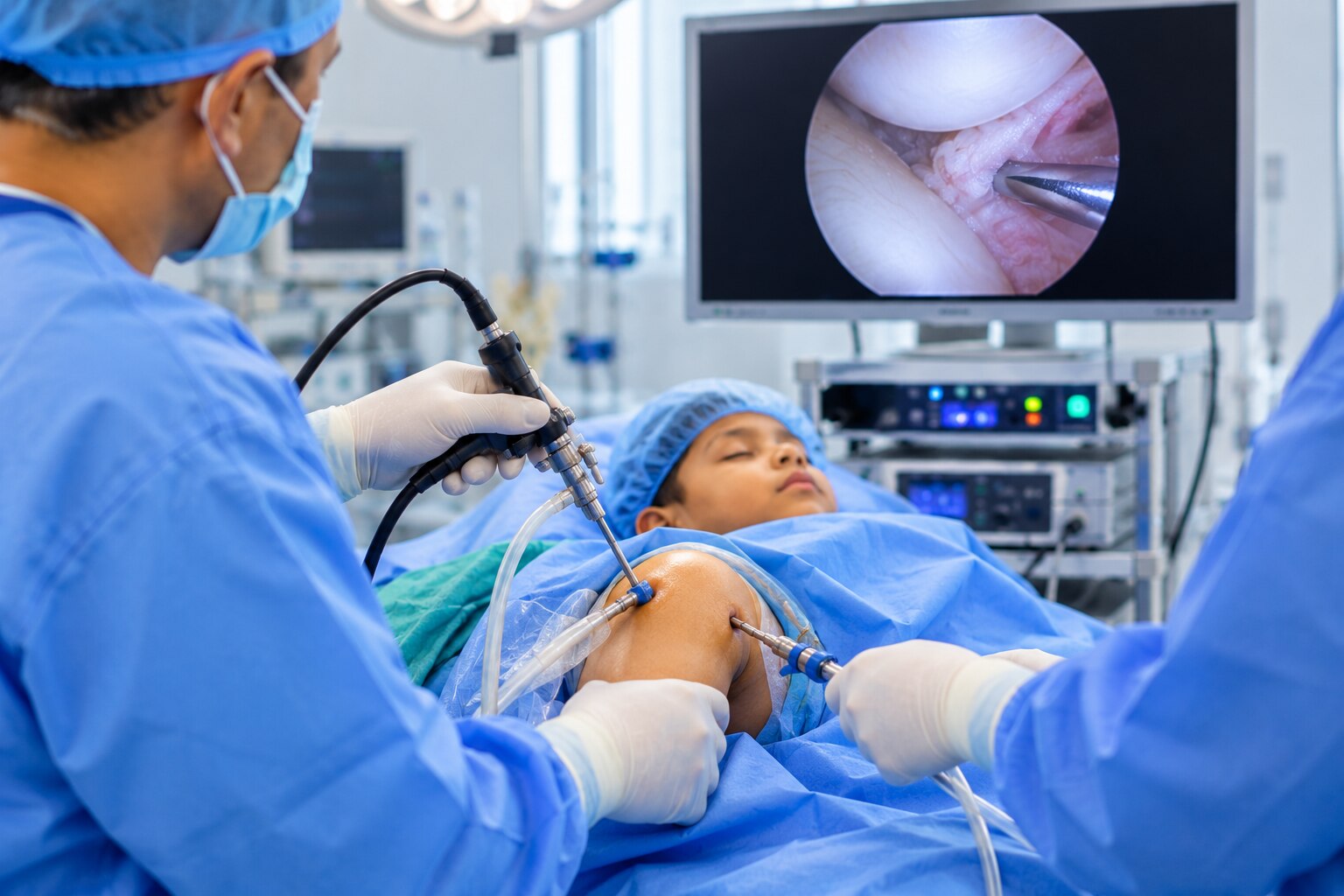
Children and teenagers can undergo arthroscopy, but age alone does not decide whether surgery is safe or necessary. By assessing growth plates, the joint problem, imaging findings and non-operative options, families can identify when paediatric arthroscopy is reasonable and what to verify before choosing care in Noida.
Key takeaways
- Open growth plates require a child-specific surgical plan.
- Arthroscopy treats selected joint problems, not every childhood pain complaint.
- A return to sport follows healing, strength and movement testing.
- Choose a Noida team with paediatric assessment and rehabilitation pathways.
When is arthroscopy safe for a child?
Children from early childhood through adolescence can safely undergo arthroscopy when the diagnosis, general health, skeletal development and paediatric facilities make it appropriate; age alone does not rule it out. The surgeon must identify whether growth plates remain open, because an adult operation can damage a physis or overlook a child’s smaller anatomy.
| Development stage | Planning issue | How the operation differs |
|---|---|---|
| Young child with open physes | Growth disturbance and small joint size | Use age-appropriate instruments and techniques that avoid growth plates |
| Adolescent with remaining growth | Physeal position affects tunnels and implants | Plan growth-plate-preserving procedures, especially for ACL reconstruction |
| Near skeletal maturity | Anatomy resembles an adult’s | Adult-style techniques may fit, but the diagnosis and remaining growth still guide choices |
Paediatric arthroscopy in Noida should therefore involve a surgeon experienced with children, not simply an adult arthroscopist. The operation may be a day case, but your child still needs fasting instructions, pre-anaesthesia assessment, age-appropriate pain relief and an adult caregiver at discharge.
Before consenting, ask:
- Which diagnosis is the operation treating, and could physiotherapy, bracing, activity restriction or observation work?
- Are the growth plates open, and how will the technique protect them?
- Will the surgeon repair tissue rather than remove it when repair is possible?
- What happens if the arthroscopy shows something different from the scan?
- Which paediatric anaesthesia, emergency and rehabilitation services are available?
Which childhood joint problems need arthroscopy—and which do not?
A locked knee, displaced osteochondral fragment, symptomatic loose body or repeated giving-way needs prompt orthopaedic assessment because movement can be blocked or joint damage can progress. Arthroscopy is considered when imaging and examination show a repairable internal problem, symptoms persist despite treatment, or infection requires joint washout. Many overuse injuries improve without surgery.
Conditions that may justify arthroscopy include:
- Unstable or displaced meniscal tears, cartilage injuries and osteochondritis dissecans.
- Loose bodies causing catching, locking or swelling.
- Recurrent kneecap instability or selected ligament injuries.
- Septic arthritis, which requires urgent treatment rather than routine observation.
- Selected problems of the hip, ankle, elbow or shoulder.
For families considering arthroscopy for children in Noida, the diagnosis, open growth plates, skeletal maturity and response to non-operative care matter more than the child’s age alone. Compare the choices directly:
| Option | What it does | When it fits |
|---|---|---|
| Physiotherapy | Restores strength, control and movement | Overuse pain, stable injuries and recovery after immobilisation |
| Activity modification | Removes the provoking load | Running-related pain or mild sports injuries |
| Bracing or casting | Supports or immobilises the joint | Instability, selected fractures or healing repairs |
| Medication | Controls pain or inflammation | Short-term symptom relief, not a mechanical blockage |
| Observation | Monitors symptoms and imaging | Stable, improving conditions without locking |
| Arthroscopy | Repairs or removes selected joint damage | Persistent mechanical symptoms, loose bodies or unstable tears |
| Open surgery | Provides wider access for reconstruction or complex repair | Conditions arthroscopy cannot safely correct |
How is a child assessed before the operation?
Assessment starts by confirming the diagnosis, not by booking a procedure. The clinician records the injury, pain pattern, locking or instability, fever, previous treatment, medicines, allergies and medical conditions, then explains what happens if physiotherapy, activity changes, bracing or observation continues.
- The physical examination checks walking, swelling, tenderness, range of motion, strength, stability, circulation and sensation. The opposite joint provides a useful comparison.
- X-rays show bone alignment, fractures, loose bodies and joint development. MRI gives more detail about menisci, cartilage, ligaments, tendons and hidden bone injury.
- Ultrasound helps when fluid, a superficial tendon problem or a hip effusion needs assessment. It does not replace MRI for many internal knee injuries.
- The surgeon reviews open growth plates on the images. For procedures such as ACL reconstruction, tunnel or implant placement near a physis can disturb growth, so the technique must match the child’s remaining growth.
- The anaesthesia team checks weight, breathing, heart history, recent illness, medicines, allergies and previous anaesthetic reactions. Parents receive fasting instructions, age-appropriate pain-control plans and discharge requirements, including an adult caregiver.
Before consenting, ask which diagnosis the operation treats, which non-operative options remain, whether repair is possible instead of tissue removal, and the expected time away from school and sport. Discuss infection, bleeding, stiffness, nerve or blood-vessel injury, anaesthetic complications, growth disturbance, persistent symptoms and what happens if the arthroscopic findings differ from the scan.
What does arthroscopy mean for a young athlete’s return to sport?
Arthroscopy does not mark the end of treatment for a young athlete; it starts a planned rehabilitation phase. Pain and swelling must settle, wounds must heal, and the repaired or reconstructed tissue needs protection before training resumes. The timeline depends on the procedure and healing biology, not simply on the fact that surgery was performed.
The operation’s findings also change the pathway. Removing an unstable loose body may allow quicker progression than repairing a meniscus or restoring a cartilage surface, while ACL reconstruction requires months of progressive rehabilitation.
Repair preserves tissue but can impose stricter limits on bending, weight-bearing and pivoting; ask which restrictions apply and what happens if the surgeon finds a different injury than the scan suggested.
A safe return after arthroscopy for young athletes is based on function. Before clearance, the child should demonstrate:
- Near-symmetrical strength in the operated and unoperated limbs
- Controlled squats, landing, hopping and changes of direction without pain or the knee collapsing inward
- Full or planned joint movement, with no significant swelling after exercise
- Sport-specific drills completed at increasing speed and intensity
- Confidence using the limb, without guarding or fear of movement
A calendar date alone cannot prove readiness. The surgeon and physiotherapist should review these findings together, then use a graded return to practice before unrestricted competition.
How should families choose paediatric arthroscopy care in Noida?
Do not book until the team can explain the child’s diagnosis, growth-plate status, planned technique and alternatives in plain language. An adult arthroscopy specialist is not automatically a paediatric specialist; ask an arthroscopy surgeon in Noida about experience with children, smaller joint anatomy and growth-plate-preserving methods.
- Confirm the hospital treats the child’s age group and the specific joint and procedure.
- Verify that a paediatric anaesthetist will assess and monitor the child, including recovery after anaesthesia.
- Ask who handles an airway problem, bleeding, infection or severe pain after discharge, and where emergency care occurs.
- Request review of the actual X-rays or MRI, not only the written report; ask how open growth plates change the operation.
- Ask whether repair is possible instead of removing a meniscus or cartilage fragment, and what happens if the surgical findings differ from the scan.
- Obtain a written rehabilitation plan covering school, walking, physiotherapy, sport restrictions and strength or movement testing.
| Check | Evidence to request | Warning sign |
|---|---|---|
| Surgeon | Paediatric case experience and growth-plate technique | Only adult case examples |
| Hospital | Age-specific equipment and emergency backup | Staff cannot name the emergency pathway |
| Recovery | Named physiotherapist and follow-up dates | “Resume activity when comfortable” |
If considering Dr.A.K.Sharma-Ortho & joint replacement surgeon, ask these same questions rather than relying on a clinic’s general arthroscopy description. Fever, a hot swollen joint, severe movement pain or refusal to walk requires urgent assessment, not elective booking.
Related service
Arthroscopy Minimally Invasive Solutions: Advanced Arthroscopy Surgery in Noida At Global Orthopaedics and Speciality Clinics in Noida, we offer advanced... |
Frequently asked questions
When is arthroscopy safe for a child?
Arthroscopy is considered when the diagnosis is clear, the child is medically fit, and the surgeon can protect open growth plates and account for smaller anatomy.
Which childhood joint problems need arthroscopy?
Selected meniscus tears, loose bodies, cartilage injuries, unstable kneecaps and some sports injuries may need arthroscopy. Many overuse injuries, infections and growth-related pains require other treatment.
How is a child assessed before arthroscopy?
Assessment includes the child’s symptoms, physical examination, activity level, medical history and imaging. The surgeon also checks skeletal maturity, open growth plates, anaesthesia needs and rehabilitation requirements.
When can a young athlete return to sport after arthroscopy?
Return depends on the procedure and healing progress. The athlete should regain pain-free movement, strength, balance and sport-specific control before returning to training or competition.
How should families choose paediatric arthroscopy care in Noida?
Ask about experience treating children, growth-plate planning, anaesthesia and hospital facilities, infection precautions, rehabilitation, follow-up and clear return-to-sport criteria.
Keywords