A wet court or muddy field increases slips, sudden pivots and awkward falls, but rain does not decide whether you need arthroscopy. The useful decision comes from identifying the injured structure, checking for urgent warning signs and matching treatment to the tear, fracture or instability found on examination and imaging.
Key takeaways
- Urgent assessment is needed for a locked joint, deformity, numbness or inability to bear weight.
- MRI and examination help identify tears that arthroscopy could treat.
- Rest and structured rehabilitation often come before surgery.
- Bring injury details, scans, reports and a medication list to your consultation.
What changes during monsoon sports—and when the injury is urgent
Rain changes traction, not the medical indication for arthroscopy. In monsoon sports injuries in noida, rain-slick courts, muddy football fields and standing water reduce grip, causing sudden pivots, twisting injuries, slips, falls and direct impacts. The season explains how the injury happened; the damaged structure, symptoms and examination determine treatment.
Knee injuries commonly involve the ACL, meniscus, cartilage or kneecap after a twist or fall. An ankle may sprain, dislocate or fracture when the foot rolls on uneven mud. Shoulders, wrists, elbows and hips can also be injured by a direct impact or by landing on an outstretched hand.
Arthroscopy is not automatically indicated for any of these patterns.
Seek urgent assessment if you have:
- An obviously deformed joint.
- Inability to bear weight.
- A knee that is locked or cannot fully extend.
- Rapidly increasing swelling.
- Numbness, or a foot that is cold or pale.
- An open wound, especially with an unstable joint or suspected fracture.
- Fever or chills with a hot, swollen joint and worsening pain.
Do not treat suspected infection, fracture or an unstable open injury as a routine sprain. A hot swollen joint with fever or chills may need urgent aspiration and antibiotics; arthroscopy, if required, becomes infection treatment rather than elective sports surgery.
How doctors decide whether arthroscopy is appropriate
Arthroscopy after sports injury is considered only after a suspected diagnosis. Rain does not create an indication for surgery. The doctor first records the injury mechanism, swelling, locking, giving way and activity goals, then checks alignment, tenderness, movement, stability, pulses and sensation.
Plain X-rays are usually the first scan when a fracture or dislocation is possible. They can show broken bone, joint alignment and some bone or joint-space changes, but they cannot reliably show an ACL tear, meniscus tear or cartilage injury.
MRI is useful when examination and X-rays do not explain persistent symptoms or suggest internal derangement.
The decision then follows the structure involved:
- A meniscus tear with true locking, where a torn fragment blocks movement, follows a different pathway from a stable tear without locking.
- ACL reconstruction depends on repeated instability, sports and work goals, associated meniscus or cartilage damage, rehabilitation capacity and your preference—not the MRI image alone.
- Cartilage lesions and loose bodies need separate assessment because size, location, symptoms and joint damage affect treatment.
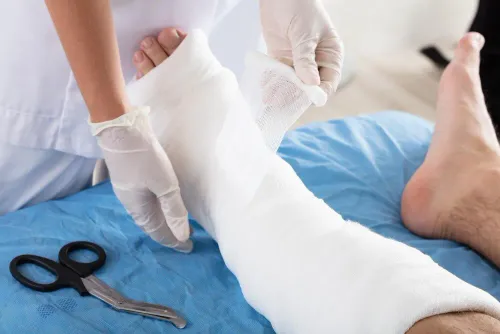
- An ankle injury or fracture often needs X-rays, immobilisation, reduction or fracture treatment rather than knee-style arthroscopy.
An abnormal MRI alone is not a sufficient reason for surgery. If the joint is hot and very swollen with fever, chills or worsening pain, seek urgent assessment for infection; this is not routine elective arthroscopy.
Arthroscopy versus rest, rehabilitation and other first treatments
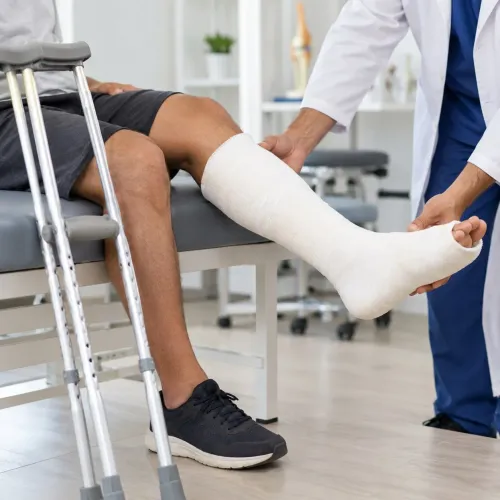
Improving symptoms, a stable joint, no true locking and imaging without a problem needing prompt repair make rehabilitation a sensible first step. Reduce sport and twisting, use ice wrapped in cloth, compression, elevation, a brace or crutches when advised, and pain control as advised.
Physiotherapy should progress from movement and strength to a gradual return-to-play programme.
| Option | What it means | When it applies |
|---|---|---|
| Rehabilitation first | Activity modification, symptom control, physiotherapy and staged strengthening | Improving symptoms, stable joint, no true locking and no repair requiring prompt action |
| Meniscus trimming | Removes unstable tissue while preserving as much meniscus as possible | A damaged section causes persistent symptoms and cannot be repaired; removing more tissue increases later joint stress |
| Meniscus repair | Sutures the tear and protects the repaired tissue for longer | A repairable tear, especially when preservation is preferable; expect longer restrictions than trimming |
| ACL reconstruction | Arthroscopy forms part of a larger reconstruction decision involving a graft | Repeated instability, activity goals, associated damage, rehabilitation capacity and patient preference support reconstruction |
| Cartilage treatment | Treatment is tailored to the lesion’s size, depth, location and symptoms | Cartilage damage or a loose body needs specific assessment rather than automatic arthroscopy |
Arthroscopy is not the immediate choice for suspected fracture, infection, severe swelling or an open injury. For knee injury treatment in Noida, ask which structure is injured and what rehabilitation would risk; a hot joint with fever, an open wound or worsening swelling needs urgent assessment, not elective surgery.
The practical cost of choosing arthroscopy after a wet-weather injury
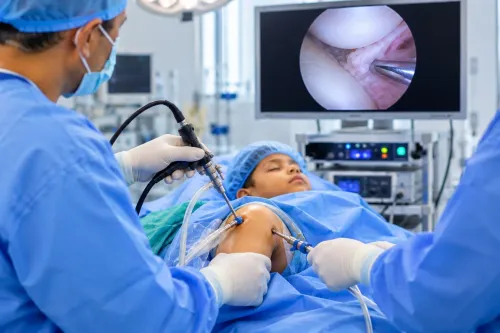
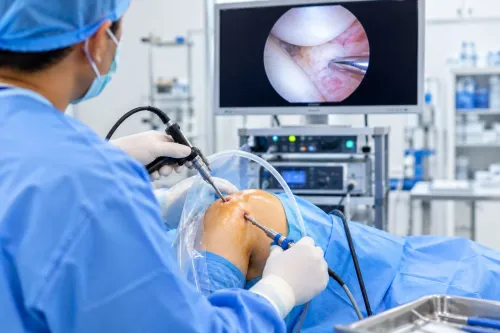
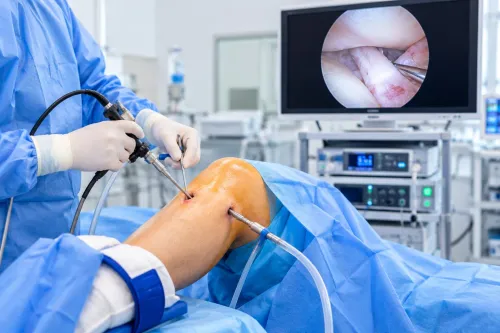
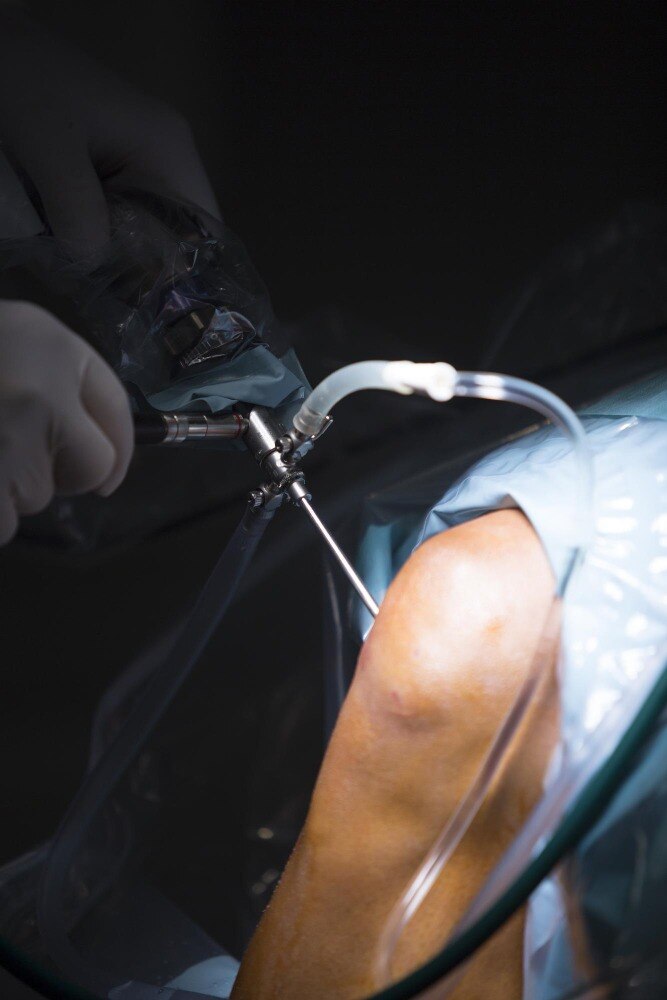
Arthroscopy usually uses regional or general anaesthesia. The surgeon passes a camera and instruments through small incisions, but small wounds do not mean zero recovery. Expect pain, swelling, dressings, restricted activity, and sometimes crutches; follow prescribed pain relief and keep the wounds clean and dry.
| Procedure | Protection and recovery focus |
|---|---|
| Simple arthroscopy | Early movement and weight-bearing as advised; shorter rehabilitation |
| Meniscus trimming | Gradual weight-bearing, swelling control and strengthening |
| Meniscus repair | Longer protection while the repair heals, followed by movement and strength work |
| ACL reconstruction | Staged graft protection, progressive strengthening and sport-specific testing |
Driving depends on the operated leg, vehicle controls, pain medicines and your ability to brake safely; ask the surgeon before driving. Plan for missed school or work, follow-up appointments, and physiotherapy rather than assuming a quick return to sport.
During Noida’s monsoon, arrange covered transport if roads are flooded, keep dressings dry, and avoid standing water near the wound. Check the skin around the operative site for increasing redness, warmth, discharge or spreading irritation.
Delay elective surgery until an open wound, skin infection, uncontrolled illness, or poor access to early review and rehabilitation is addressed. Rain itself neither requires nor prevents arthroscopy. Recovery follows the procedure and the injured structure, not the weather.
What to take to an arthroscopy consultation in Noida
Bring a one-page injury record to an arthroscopy consultation in Noida. Note:
- Injury date and the exact mechanism: pivot, landing, collision, fall or direct blow.
- Whether the knee swelled immediately, and how quickly swelling increased.
- Every episode of true locking, catching or giving way.
- Whether you can bear weight, climb stairs and walk without support.
- Previous injuries, operations and treatment to the same joint.
- Your sport, playing level and activity goals.
- Current medicines, allergies and medical conditions.
Bring the actual X-ray or MRI images, on film, disc or a viewing link, along with the written reports. The images let the doctor compare the scan with your symptoms and examination; a report alone can miss the practical context.
Ask these questions plainly:
- Which structure is injured: meniscus, ACL, cartilage, patella or another tissue?
- Is the tear repairable?
- If trimming is proposed, how much meniscus will be preserved?
- What happens if I try rehabilitation first?
- How long will I need crutches, avoid driving and attend physiotherapy?
| Choice | Clarify | Why it matters |
|---|---|---|
| Surgery | Procedure, protection and risks | Recovery depends on the repair |
| Rehabilitation first | Exercises, review date and warning signs | Improvement may avoid unnecessary surgery |
| Further testing | What question MRI or X-ray must answer | An abnormal MRI alone does not justify arthroscopy |
At Dr.A.K.Sharma-Ortho & joint replacement surgeon, framing the appointment around these findings helps Noida patients compare surgery with rehabilitation rather than treating arthroscopy as automatic.
Related services
Arthroscopy Minimally Invasive Solutions: Advanced Arthroscopy Surgery in Noida At Global Orthopaedics and Speciality Clinics in Noida, we offer advanced... |
Get Back in the Game: Expert Sports Injury Treatment in Noida Are you a athlete sidelined by a sports injury? At Global Orthopaedics and Speciality... View service → |
Frequently asked questions
When is a monsoon sports injury urgent?
Seek urgent medical assessment for a deformed joint, a locked knee, numbness, severe swelling, an open wound or inability to bear weight.
How do doctors decide whether arthroscopy is appropriate after a sports injury?
They combine your injury history, physical examination and imaging such as X-rays or MRI to identify the damaged structure and assess whether surgery is justified.
Is arthroscopy always needed after a wet-weather sports injury?
No. Depending on the injury, rest, activity changes, pain control and supervised rehabilitation may be tried before arthroscopy.
What should you bring to an arthroscopy consultation in Noida?
Bring previous scans and reports, a list of medicines, details of the injury, your symptoms, prior treatment and questions about recovery and return to sport.
Related service
Comprehensive Care for Orthopedic Conditions Expert Orthopedic Treatment in Noida and Delhi NCR Welcome to our clinic, where we provide specialized... View service → |
Keywords