A deformed limb, exposed bone, uncontrolled bleeding, loss of sensation, or a cold hand or foot needs emergency action, not a routine appointment. You will learn how to protect the injury, decide when an ambulance is safer, understand hospital testing and treatment, and recognise complications that require immediate reassessment.
Key takeaways
- Treat exposed bone, severe deformity, or uncontrolled bleeding as an emergency.
- Call an ambulance for numbness, paralysis, or a cold, pale, blue limb.
- Do not push exposed bone back or straighten a severely deformed limb.
- Choose definitive fracture care after emergency bleeding and circulation problems are controlled.
How to recognise a fracture that needs emergency care
Bone through the skin, an open wound, severe deformity, uncontrolled bleeding, numbness, paralysis, or a cold, pale or blue hand or foot makes the injury an emergency.
Loss of a pulse, suspected spine or pelvic injury, head injury, or inability to bear weight also requires immediate assessment, not a routine appointment for emergency fracture treatment in Noida.
Intact skin does not make a fracture safe to wait on. A dislocation, crush injury, fracture affecting a blood vessel or nerve, or acute compartment syndrome can threaten the limb without an obvious wound.
Escalating pain, tight swelling, pain when fingers or toes are stretched, tingling, weakness, or reduced movement needs urgent fracture care in Noida; a normal pulse does not rule out compartment syndrome.
In the first minutes:
- Call emergency services for major bleeding, altered consciousness, suspected spine or pelvic injury, head injury, paralysis, loss of pulse, or a cold or blue limb.
- Keep the person still and support the injured limb in the position found. Do not encourage walking, even after pain improves; pain relief does not prove that the injury is stable.
- Press a clean dressing around an open wound to control bleeding. Never push exposed bone back or forcibly straighten the limb.
- Remove rings, watches, shoes, and tight clothing before swelling increases, but do not pull items across a deformed injury.
Seek immediate reassessment for new numbness, weakness, pale or blue digits, coldness, increasing swelling, a tight or wet cast, fever, foul drainage, or inability to move fingers or toes.
When an ambulance is safer than driving to hospital
After a road crash, fall from height, head injury, breathing difficulty, suspected neck or back injury, major bleeding, multiple injuries, or shock signs such as faintness, clammy skin and confusion, call an ambulance rather than driving. Paramedics can protect the spine, control bleeding and treat deterioration during transport.
1. Tell emergency responders how the injury happened, the time it occurred, the amount of bleeding, any loss of consciousness, medicines and allergies, and changes in sensation or limb colour.
2. Keep the person still while waiting. If a spinal injury is possible, do not twist or lift them; keep the head, neck and torso aligned unless immediate danger forces movement.
3. Cover an open wound with a clean dressing, but do not push exposed bone back, close the wound or apply pressure directly to protruding bone. Remove rings, watches and tight clothing before swelling increases.
4. Give no food or drink if surgery may be needed. Watch for worsening breathing, faintness, confusion, bleeding or colour change and report it immediately.
For a stable injury without these warning signs, support the limb in the position found and transport the person without weight-bearing. Check fingers or toes repeatedly for normal colour, warmth, sensation and movement. These precautions support urgent fracture care in Noida and help clinicians begin bone injury treatment in Noida without an avoidable transport injury.
What happens during emergency fracture assessment
On arrival, triage identifies threats to life, circulation, sensation and skin before routine fracture care begins. Staff control bleeding, cover wounds with a clean dressing, provide pain relief and record pulses, capillary refill, skin colour and temperature, sensation, and motor function in the injured limb.
1. Expect these checks before and after any splinting, manipulation or reduction. Swelling, displacement or a tight splint can compromise a blood vessel or nerve; a post-procedure comparison detects that change.
2. Plain X-rays are usually the first imaging test, with at least two views taken at different angles. A normal image does not rule out an occult fracture when focal bone tenderness or inability to bear weight persists. The clinician may arrange repeat imaging, CT or MRI.
3. CT gives detailed views of complex fractures involving a joint, spine or pelvis and helps plan surgery. MRI is more useful for an occult injury or associated ligament, cartilage and soft-tissue damage than for the initial emergency assessment.
4. An older adult who cannot stand or bear weight after a fall needs emergency evaluation for a possible hip fracture, even without obvious shortening or outward rotation.
Emergency stabilisation means analgesia, wound care, immobilisation, neurovascular checks and imaging. Definitive bone injury treatment in Noida may later involve a cast, reduction, fixation or specialist follow-up after the full fracture pattern and swelling are assessed. Emergency fracture treatment in Noida should therefore begin at a facility equipped for urgent imaging and surgical escalation.
Why open fractures and worsening pain need immediate action
An open fracture is any fracture that communicates with an outside wound, even a pin-sized puncture. Covering it at home does not make it safer, and closing the skin can trap contamination. Hospital care includes sterile coverage, intravenous antibiotics, tetanus assessment, urgent surgical irrigation and debridement, followed by infection monitoring.
Escalating pain that seems excessive for the injury can signal acute compartment syndrome. Treat pain during passive stretching of the fingers or toes, increasing tightness or swelling, tingling, weakness, or reduced movement as warning signs.
A normal pulse does not reliably exclude this time-critical surgical emergency; seek immediate assessment by a trauma orthopaedic surgeon in Noida.
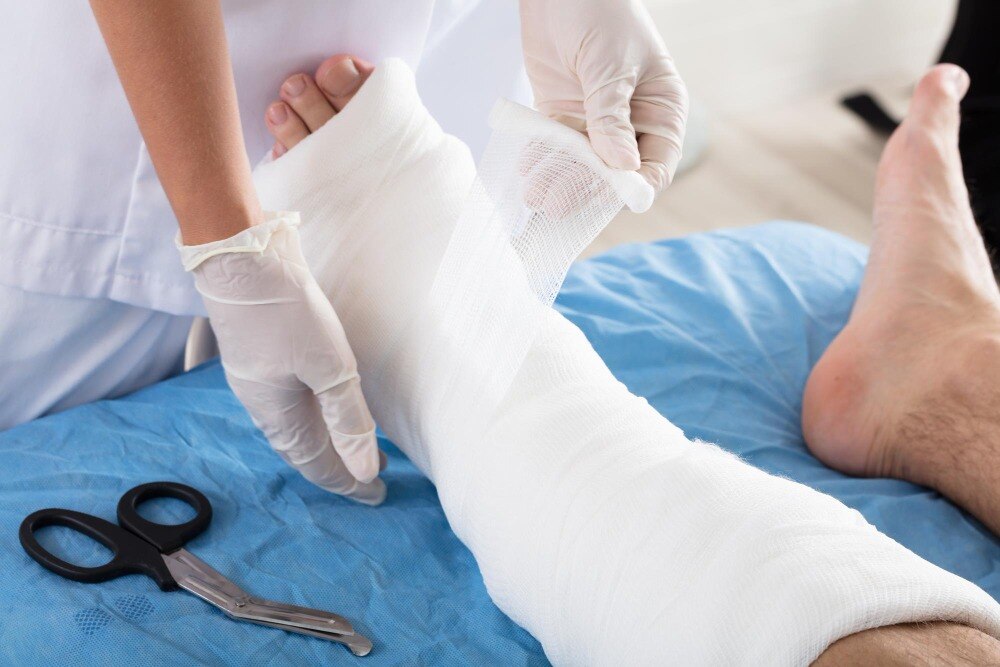
A temporary splint is often safer than a full circumferential cast during the first hours or days because swelling can rise and create dangerous pressure inside a closed cast. Return immediately for:
- New or increasing numbness, burning, weakness, or inability to move fingers or toes
- Pale, blue, or cold digits
- Increasing pain, swelling, or a cast that feels wet or tight
- Fever or foul-smelling drainage
Urgent fracture care in Noida should include these return instructions and access to emergency surgery when needed. Do not wait for a routine appointment if any warning appears.
How to choose definitive fracture care after stabilisation
Pain intensity does not determine definitive fracture care. A stable, well-aligned fracture may need reduction and immobilisation, while displacement, joint-surface damage, an open wound, instability, or threatened nerves and blood vessels can require external fixation or internal fixation.
| Option | What it means | When it applies |
|---|---|---|
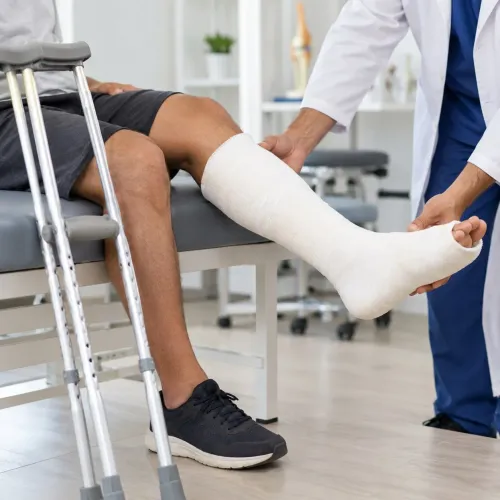
| Splint or cast | Holds the reduced bone while it heals | Stable alignment or temporary support while swelling settles |
| Traction | Uses controlled pulling to maintain position | Selected fractures needing alignment before definitive treatment |
| External fixation | Pins connect the bone to a frame outside the skin | Severe soft-tissue damage, open fractures, or temporary stabilisation |
| Internal fixation | Plates, screws, nails, or wires hold the fracture internally | Unstable, displaced, or joint-involving fractures requiring reliable alignment |
Ask a fracture doctor in Noida to identify the fracture location, displacement, joint involvement, skin condition, pulses, capillary refill, sensation, and motor function. Ask why a splint, cast, traction, or operation is recommended.
Choose a trauma orthopaedic surgeon in Noida and a hospital that can provide emergency imaging, anaesthesia, surgery, blood-bank support, and postoperative monitoring for major wounds, multiple injuries, compartment syndrome, or vessel and nerve problems. These capabilities matter more than a “fracture clinic” label.
Dr.A.K.Sharma-Ortho & joint replacement surgeon can be considered when arranging bone injury treatment in Noida. A second opinion is reasonable before surgery when the injury is not immediately limb-threatening.
Follow-up must check alignment, wounds, circulation, cast fit, and healing. Rehabilitation restores motion and strength; early cast removal or returning to sport risks stiffness, loss of alignment, refracture, or hardware problems.
Related service
Expert Fracture and Trauma Care Specialized Treatment from Top Orthopaedic Surgeons in Noida and Delhi NCR Welcome to our Fracture and Trauma Care... View service → |
Frequently asked questions
Which fracture symptoms require emergency care?
Seek emergency care for exposed bone, an open wound, severe deformity, uncontrolled bleeding, numbness, paralysis, or a cold, pale, or blue hand or foot.
When should you call an ambulance for a fracture?
Call an ambulance when the limb is severely deformed, bleeding cannot be controlled, circulation is impaired, or moving the injured person could worsen the injury.
What happens during emergency fracture assessment?
Clinicians check the injury, circulation, sensation, movement, skin condition, bleeding, and pain before using imaging and stabilisation to plan treatment.
Why do open fractures and worsening pain need immediate treatment?
Open fractures expose bone and deep tissue to contamination, while worsening pain can signal swelling, circulation problems, or pressure that threatens the limb.
How do you choose definitive fracture care after stabilisation?
After stabilisation, discuss the fracture pattern, bone alignment, joint involvement, soft-tissue damage, treatment options, recovery time, and follow-up with a fracture specialist.
Keywords