A sudden twist of the knee during football, badminton, running, jumping, or even an awkward fall can injure the anterior cruciate ligament. Commonly called the ACL, this ligament plays an important role in controlling knee stability, particularly during movements involving turning and rapid changes of direction.
An ACL tear does not automatically mean surgery. Understanding the injury first is essential before deciding whether ACL reconstruction surgery is appropriate.
What Does the ACL Do
The ACL connects the thigh bone to the shin bone and helps prevent excessive forward movement and rotational instability of the knee.
An injury often occurs without direct contact. A person may land incorrectly after jumping, stop suddenly, or change direction while the foot remains planted.
Some patients describe hearing or feeling a pop at the time of injury. The knee may then swell and become difficult to walk on.
Typical symptoms can include:
- Rapid swelling
- Knee pain
- Difficulty bearing weight
- A feeling that the knee is unstable
- Reduced movement
- Repeated giving way during twisting activities
Symptoms vary, so clinical assessment is important.
Does an ACL Tear Always Need Reconstruction
No. Treatment depends on several factors.
Someone with a partial injury and a stable knee may be managed differently from an athlete with a complete tear and repeated instability. Age alone is not the deciding factor.
An orthopedic surgeon considers activity level, occupation, sports participation, associated injuries, knee stability, and the patient's goals.
Physiotherapy may be appropriate for selected patients. Rehabilitation generally focuses on reducing swelling, restoring movement, strengthening the muscles around the knee, and improving balance and neuromuscular control.
When May Surgery Be Considered
Reconstruction may be discussed when instability continues or when a person wants to return to activities that require frequent pivoting and direction changes.
Surgery may also be considered when the ACL injury occurs with certain meniscus or other ligament injuries.
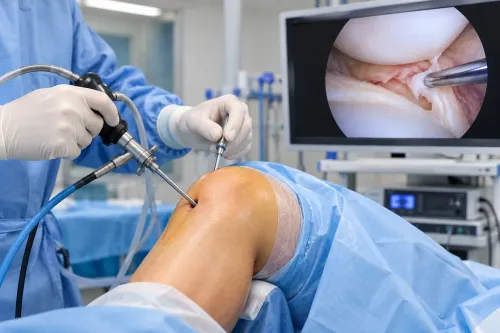
The term 'reconstruction' is important. In many cases, the damaged ACL is not simply stitched together. A graft is used to reconstruct the ligament.
Different graft options may be available, and the choice depends on individual circumstances.
How Is the Injury Diagnosed
Diagnosis normally begins with the history of how the injury occurred.
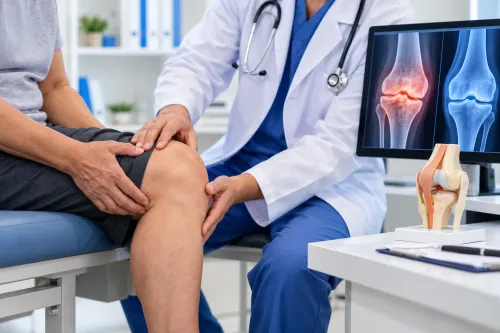
A physical examination can assess swelling, movement and ligament stability. MRI is often useful for confirming ACL damage and identifying associated injuries involving the meniscus, cartilage, or other structures.
X-rays may also be used, particularly after trauma, to look for fractures or other bony abnormalities.
Patients in Noida who have experienced a sports-related knee injury should avoid assuming that persistent pain means an ACL tear. Several knee structures can produce similar symptoms.
Recovery Is More Than the Operation
One of the most important things to understand about ACL reconstruction surgery is that rehabilitation forms a major part of the overall treatment process.
Recovery typically progresses through stages. Early goals include controlling swelling, regaining knee extension and flexion, and activating the surrounding muscles. Later rehabilitation focuses on strength, balance, movement control, and sport-specific function where appropriate.
Returning to running or competitive sport is not based only on the number of months since surgery. Strength, stability, functional testing, confidence, and the nature of the sport may all influence the decision.
Trying to progress too quickly can interfere with rehabilitation.
What Should You Ask During an Orthopedic Consultation
Useful questions include:
- Is the ACL completely or partially torn?
- Are the meniscus or other ligaments injured?
- Can my knee be managed without surgery?
- What happens if I continue playing sport with instability?
- Which graft may be suitable if reconstruction is required?
- What will rehabilitation involve?
- How will readiness to return to sport be assessed?
These questions help patients understand both surgical and non-surgical pathways.
For people seeking assessment for ACL reconstruction surgery in Noida, Dr. A.K. Sharma – Ortho and Joint Replacement Surgeon can evaluate knee stability, imaging findings, associated injuries, and activity requirements before discussing treatment.
An ACL injury can affect everyone differently. The right treatment is determined not simply by the MRI report, but by how the injured knee functions and what the patient needs it to do.
Keywords