A meniscus injury can cause pain, swelling, catching, or difficulty twisting the knee. However, not every meniscus tear requires an operation.
For patients considering meniscus surgery for knee injury, treatment depends on the tear pattern, location, symptoms, age, knee stability, cartilage condition, and activity requirements.
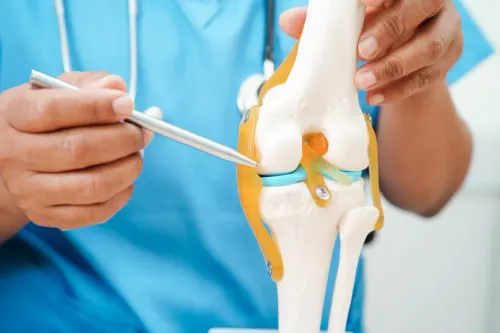
What Is the Meniscus?
Each knee contains two menisci.
These crescent-shaped structures help:
- Distribute load
- Absorb shock
- Improve stability
- Protect joint surfaces
Injury can occur suddenly or develop gradually.
Traumatic and Degenerative Tears Are Different
Traumatic tears commonly occur during twisting movements.
They are often seen in:
- Athletes
- Gym users
- Football players
- Badminton players
- People involved in sudden turning injuries
Degenerative tears occur more gradually as tissue changes with age.
The same treatment does not automatically apply to both.
What Symptoms Can Occur?
Common symptoms include:
- Pain along the joint line
- Swelling
- Pain during squatting
- Clicking
- Catching
- Difficulty twisting
- Limited knee movement
- Locking
True mechanical locking, where the knee cannot move normally, deserves careful assessment.
Does an MRI Automatically Mean Surgery?
No.
MRI can show the tear pattern, but treatment decisions should also consider symptoms and examination findings.
Some meniscal tears are visible on MRI but do not produce major functional problems.
Others can cause significant mechanical symptoms.
When Can Conservative Treatment Help?
Depending on the case, initial care may include:
- Activity modification
- Pain management
- Physiotherapy
- Muscle strengthening
- Gradual return to activity
Symptoms may improve sufficiently without surgery in selected patients.
When Is Surgery Considered?
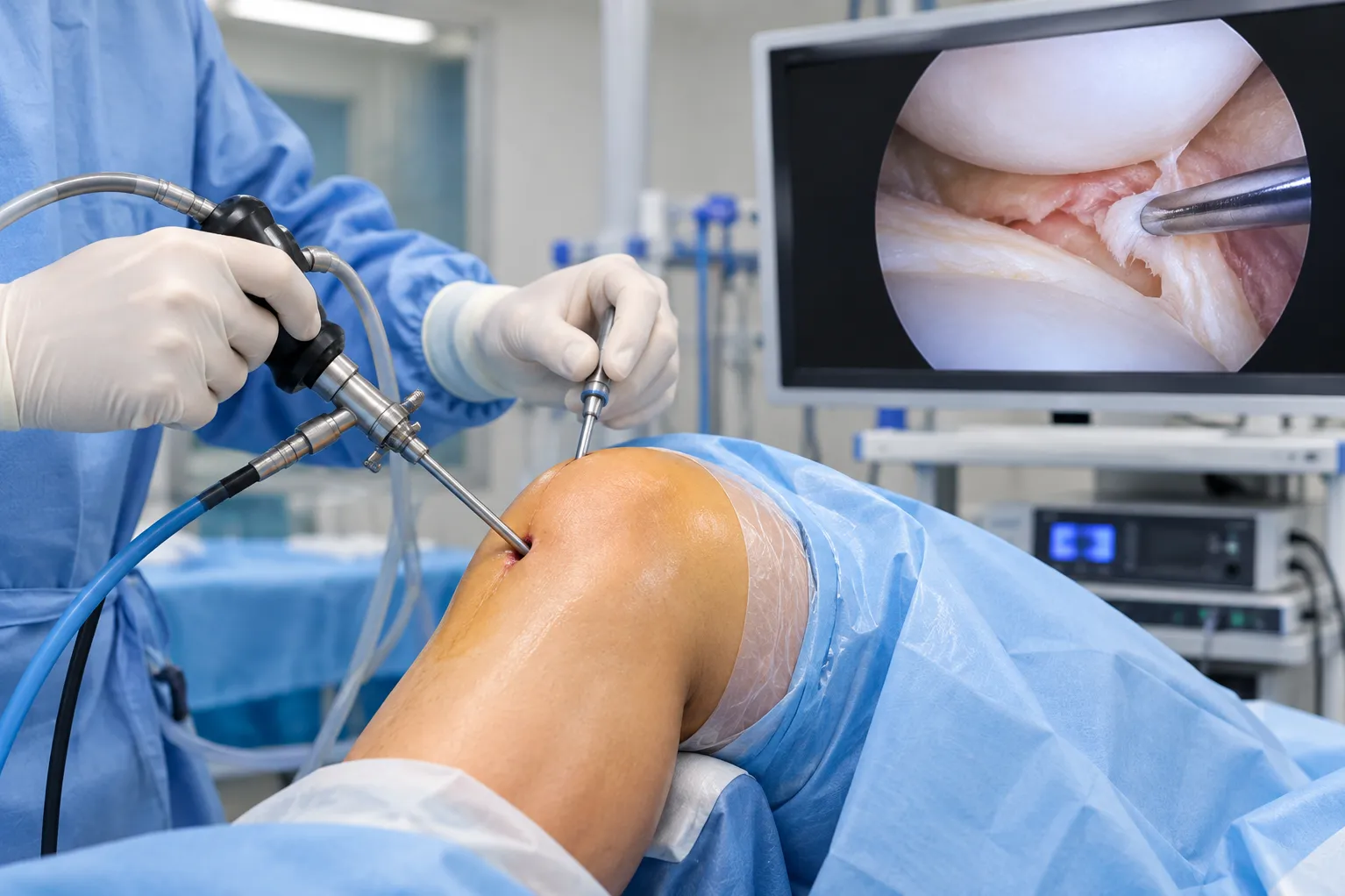
Surgery may become relevant when:
- Mechanical symptoms persist
- The knee locks
- A traumatic tear affects function
- Conservative treatment does not provide adequate relief
- Other structures such as the ACL are injured
- The tear may be suitable for repair
Repair or Partial Removal?
Meniscal preservation is generally desirable when technically possible.
A repair may be considered for suitable tears with better healing potential.
Other tears may require removal of only the unstable damaged portion.
The decision depends on:
- Tear location
- Blood supply
- Tissue quality
- Tear pattern
- Patient age
- Activity level
Rehabilitation After Surgery
Recovery varies according to the procedure.
Patients who undergo meniscal repair may have different activity restrictions from those undergoing partial meniscectomy.
Rehabilitation can include:
- Restoring movement
- Muscle strengthening
- Balance training
- Gradual loading
- Return-to-sport progression
Patients in Noida with knee pain after sports, gym activity, or twisting injuries should avoid assuming that all meniscus tears require the same treatment.
Dr. A.K. Sharma, Ortho and Joint Replacement Surgeon can assess symptoms, imaging, knee stability, and activity requirements before deciding whether conservative care or surgery is appropriate.
A meniscus tear should be treated according to how it affects the knee, not simply because it appears on a scan.
Keywords