Hip arthritis can affect far more than walking. Patients may struggle to wear shoes, get into a car, climb stairs, sit comfortably, or sleep through the night.
When the hip joint becomes severely damaged and nonsurgical care no longer provides enough relief, hip replacement surgery treatment may become an option.
For patients in Noida, understanding when surgery is appropriate can help create realistic expectations about treatment and recovery.
What Causes Hip Joint Damage?
The hip is a ball-and-socket joint.
The smooth surfaces inside the joint allow comfortable movement. When cartilage becomes significantly damaged, movement may become painful and restricted.
Possible causes include:
- Osteoarthritis
- Inflammatory arthritis
- Avascular necrosis
- Previous hip fracture
- Developmental hip problems
- Post-traumatic degeneration
Where Is Hip Arthritis Pain Usually Felt?
Hip joint pain is often felt in the groin.
It may also spread toward:
- Front of the thigh
- Side of the hip
- Buttock
- Knee
Because lower back conditions can sometimes mimic hip symptoms, accurate diagnosis is important.
When Might Hip Replacement Be Considered?
Surgery may be considered when the patient experiences:
- Persistent pain
- Difficulty walking
- Significant stiffness
- Night pain
- Reduced hip movement
- Dependence on walking support
- Difficulty performing routine activities
Imaging findings should match the patient's symptoms and functional limitations.
What Happens During Hip Replacement?
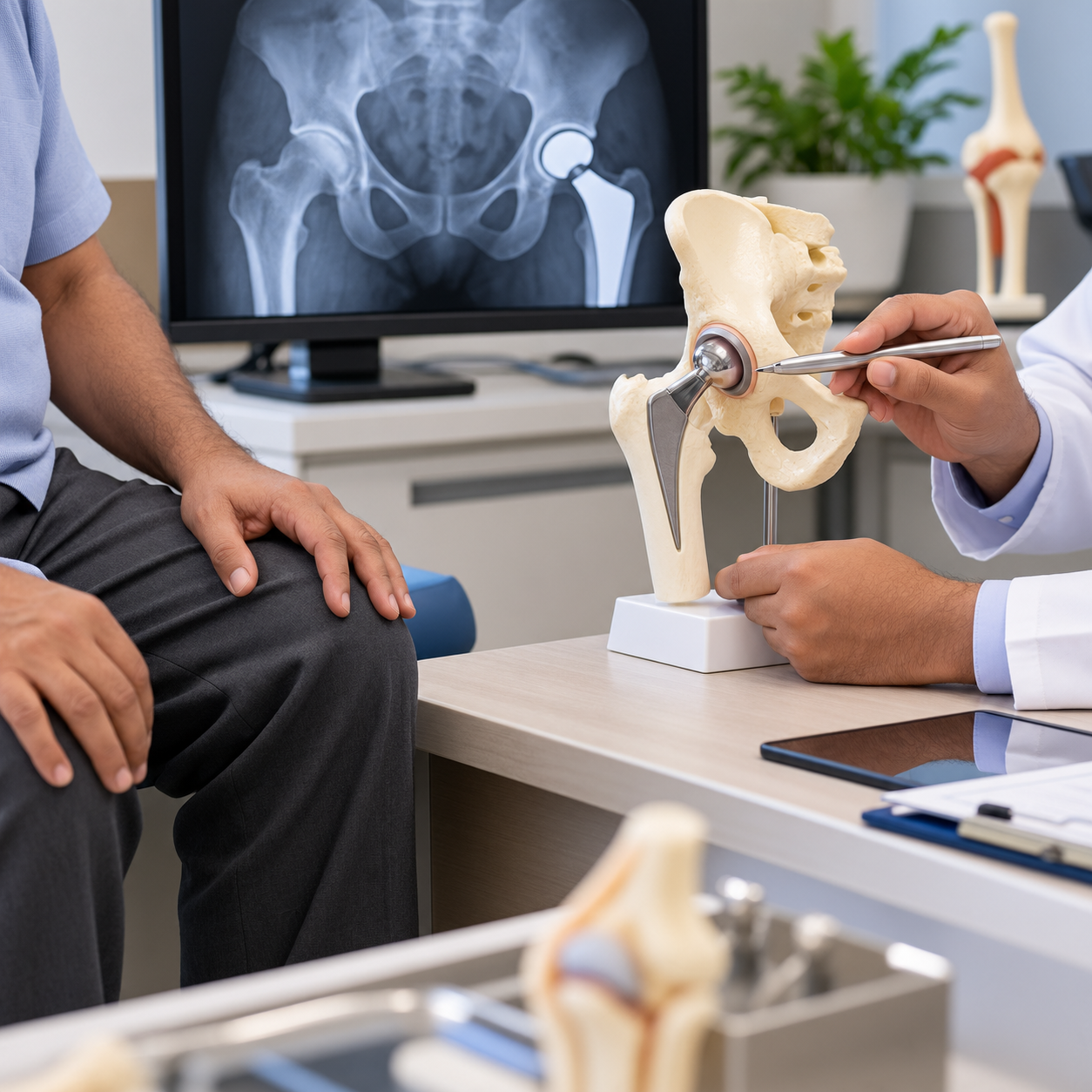
During surgery, damaged joint surfaces are replaced with artificial components.
The surgeon replaces the damaged ball at the upper end of the thigh bone and prepares the socket to receive a prosthetic surface.
Different implant designs and fixation methods may be used depending on factors such as:
- Bone quality
- Age
- Anatomy
- Activity level
- Medical condition
Why Is Preoperative Planning Important?
Hip replacement patients may be older or have other medical conditions.
Before surgery, the healthcare team may review:
- Blood pressure
- Diabetes
- Heart health
- Medication use
- Blood tests
- Infection risk
- General fitness
Patients should provide a complete medication history.
What Does Recovery Involve?
Recovery usually includes:
- Pain management
- Early mobilization
- Walking support
- Physiotherapy
- Strengthening
- Gradual improvement in daily activity
Some patients progress quickly while others require more time.
There is no single recovery timeline that applies to everyone.
What Should You Prepare at Home?
Simple changes can improve safety during early recovery.
Helpful measures include:
- Clear walkways
- Stable seating
- Reduced floor clutter
- Support from family
- Easy access to commonly used objects
- Appropriate bathroom arrangements if advised
These preparations can make daily activity easier.
Questions to Discuss Before Surgery
Before proceeding, ask:
- Is my pain definitely coming from the hip?
- How advanced is the joint damage?
- Are conservative options still useful?
- Why is surgery being recommended?
- What risks are relevant in my case?
- What activities will be restricted initially?
- How will rehabilitation progress?
Dr. A.K. Sharma, Ortho and Joint Replacement Surgeon evaluates hip arthritis and joint problems in Noida and nearby Uttar Pradesh communities.
Hip replacement should be considered when pain, stiffness, and loss of mobility are clearly related to advanced joint disease and suitable conservative measures are no longer providing acceptable function.