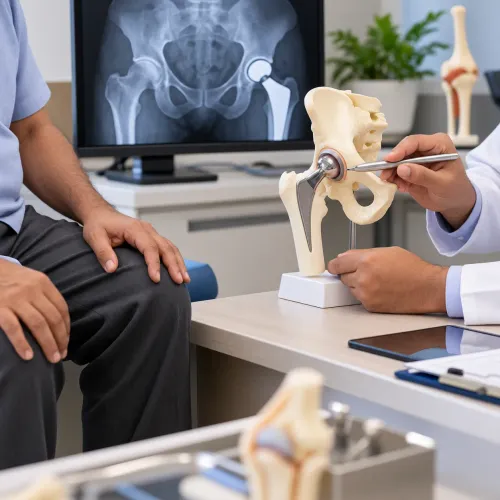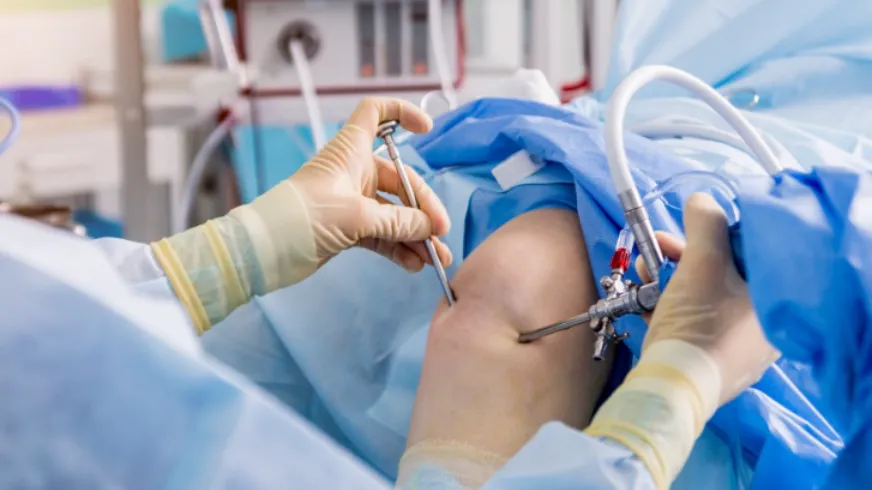
A sudden twist while playing a sport, an awkward landing, or a rapid change in direction can place substantial stress on the knee. One structure that may be injured during such movements is the anterior cruciate ligament, commonly known as the ACL.
For patients researching ACL surgery treatment, the first thing to understand is that an ACL tear does not automatically mean every person requires an operation. Treatment decisions depend on knee stability, activity requirements, associated injuries, age, occupation, sporting goals, and the degree of ligament damage.
This distinction is especially relevant for active adults and sports participants in Noida who want to return safely to demanding physical activity.
What Does the ACL Do?
The ACL is one of the major ligaments responsible for stabilizing the knee. It helps control forward movement and rotation of the shin bone relative to the thigh bone.
An ACL injury may occur during:
- Sudden changes in direction
- Pivoting movements
- Incorrect landing after a jump
- Rapid deceleration
- Direct collision involving the knee
- Certain road or workplace injuries
Some people describe hearing or feeling a “pop” at the time of injury. Swelling may develop relatively quickly, followed by pain and difficulty putting weight on the affected leg.
Why Can the Knee Feel Unstable?
After the initial pain settles, some patients notice that the knee occasionally feels as though it may give way.
This instability can become particularly noticeable during turning, running, jumping, or other movements requiring rotational control.
However, symptoms vary. Someone with lower physical demands may function differently from a competitive athlete with a similar ligament injury.
How Is an ACL Tear Diagnosed?
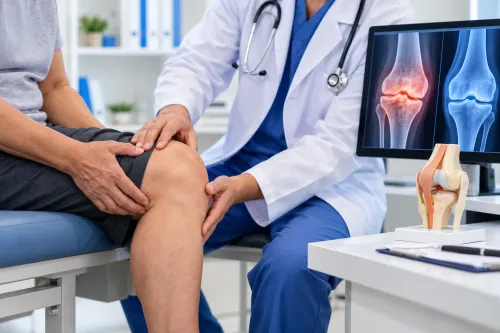
Diagnosis generally involves understanding exactly how the injury happened and examining the knee.
The orthopedic surgeon may assess swelling, range of motion and ligament stability. Imaging can provide additional information. X-rays may be used to identify associated bone injuries, while MRI can help evaluate the ACL and other soft-tissue structures such as the menisci and cartilage.
This comprehensive assessment matters because ACL injuries sometimes occur together with other knee damage.
Does Every ACL Tear Require Surgery?
No.
Some patients may be managed without reconstruction, particularly when the knee remains functionally stable and their activities do not involve significant pivoting or high-demand sports.
A structured rehabilitation programme can focus on restoring movement, reducing swelling, strengthening muscles, and improving neuromuscular control.
Surgical reconstruction may be discussed when persistent instability interferes with activity, the patient wants to return to pivoting sports, or associated knee injuries influence the treatment decision.
What Does ACL Surgery Involve?
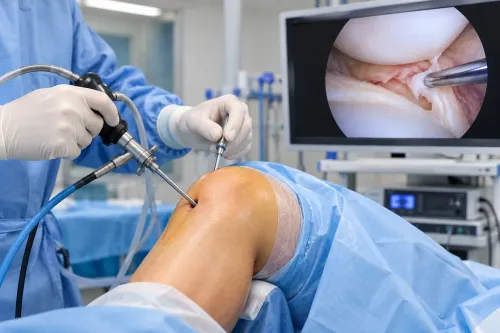
When reconstruction is appropriate, the damaged ligament is generally reconstructed using a graft. The exact graft and surgical plan depend on individual factors.
Patients should understand that surgery is only one stage of recovery. Restoring knee function also requires a carefully planned rehabilitation programme.
Why Rehabilitation Matters
Rehabilitation often progresses through several goals rather than simply waiting for a fixed number of weeks.
Early priorities can include:
- Controlling pain and swelling
- Restoring knee movement
- Regaining normal walking
- Rebuilding muscle strength
- Improving balance and control
- Progressing toward running or sport-specific movements
- Assessing readiness for higher-demand activity
Trying to return to sport solely because a certain amount of time has passed can overlook important functional factors.
When Should a Knee Injury Be Evaluated?
Persistent swelling, inability to bear weight, significant loss of movement, repeated giving-way episodes, or difficulty returning to normal activity deserves orthopedic assessment.
People involved in football, cricket, badminton, running, gym training, or other recreational sports across Noida and the wider Delhi NCR region may be tempted to resume activity as soon as pain improves. Yet reduced pain does not necessarily mean that knee stability has fully recovered.
Understanding the exact injury is therefore the starting point.
ACL treatment should ultimately be individualized around knee stability, associated damage, physical demands, and long-term activity goals rather than based only on the MRI report.
Keywords