Back pain is extremely common, but the reason behind it can vary considerably. One person may develop pain after prolonged sitting or lifting, while another may have symptoms related to a disc, arthritis, muscle strain, spinal degeneration, or nerve irritation.
This variation explains why effective back pain treatment cannot be reduced to one medicine, exercise, scan, or procedure.
The first useful step is deciding what level of care the symptoms require.
Is Rest the Best Treatment for Back Pain
Short periods of activity modification may be useful when movement is acutely painful. Extended bed rest, however, is generally not the goal for uncomplicated back pain.
Where medically appropriate, maintaining tolerable movement and gradually returning to normal activity may form part of recovery.
The correct approach depends on the cause of pain.
Muscular discomfort after unusual physical activity may settle differently from pain caused by nerve compression or a significant injury.
When Can Physiotherapy Help
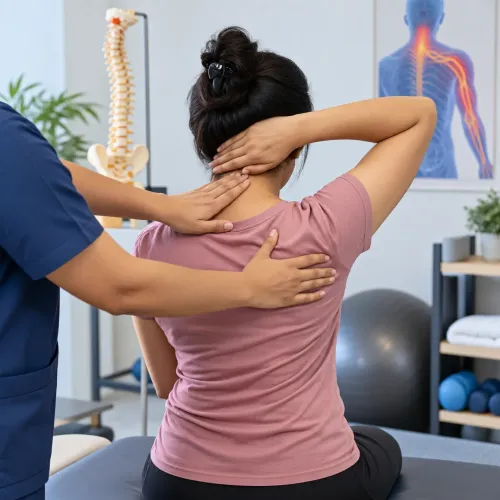
Physiotherapy may be recommended for many mechanical back conditions.
A programme can include mobility work, strengthening, posture and movement training, and guidance on gradually resuming activities.
The exercises should match the diagnosis and individual ability. Random exercises copied from another patient's programme may aggravate certain conditions.
This is especially relevant for office workers in Noida and the Delhi NCR region who spend long hours sitting, commuting, or working at computers. Ergonomic changes may help, but posture is only one potential contributor to back symptoms.
When Is an Orthopedic Evaluation More Important
Persistent or recurrent pain deserves evaluation when it interferes with normal activity or does not improve as expected.
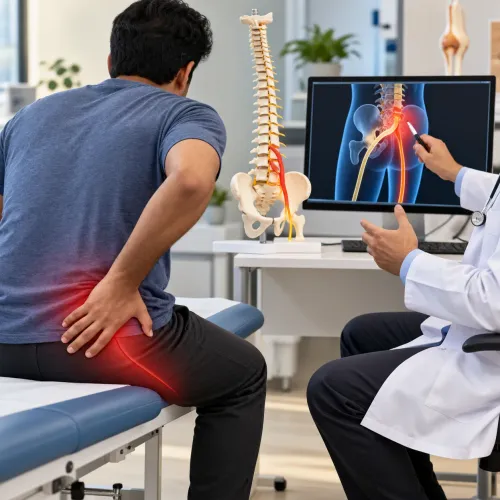
Clinical assessment becomes particularly important when pain travels into the leg, numbness develops, weakness appears, or symptoms follow significant trauma.
An orthopedic examination can evaluate spinal movement, muscle function, reflexes, sensation, and signs of nerve involvement.
Imaging is then selected when clinically appropriate.
Does Every Patient Need an MRI
No.
One of the common misconceptions about back pain treatment is that an MRI is always necessary. Many episodes of uncomplicated back pain can initially be assessed clinically.
Imaging becomes more useful when symptoms, examination findings, duration, trauma history, or other factors suggest that additional investigation is required.
Even when an MRI shows disc bulges or degenerative changes, those findings need clinical interpretation. Structural changes can exist without being the sole cause of symptoms.
Which Symptoms Need Prompt Medical Attention
Certain symptoms should not be treated as routine backache.
Seek prompt medical assessment for back pain accompanied by concerning features such as:
- New or progressive leg weakness
- Significant numbness
- Loss of bladder or bowel control
- Numbness around the saddle or groin region
- Severe pain after major trauma
- Fever with significant back pain
- Unexplained systemic symptoms
- Pain in a person with relevant serious medical history
These features do not establish a diagnosis themselves, but they can change how urgently a patient should be assessed.
How Should Treatment Options Be Compared
Rather than asking which treatment is 'best' for all back pain, patients can ask three more useful questions.
First, what structure or condition is likely producing the symptoms?
Second, are there signs of nerve involvement or another problem requiring investigation?
Third, what is the least invasive reasonable treatment for the diagnosed condition?
For many people, treatment remains conservative. Selected spinal conditions may require injections, specialist procedures, or surgery, but these decisions depend on diagnosis and severity.
For people looking for back pain treatment in Noida, Dr. A.K. Sharma – Ortho and Joint Replacement Surgeon can assess symptom patterns, movement limitations, neurological findings, and relevant imaging before discussing management options.
The key is matching treatment intensity to the actual problem. Mild mechanical pain, persistent nerve-related symptoms, and pain following significant trauma should not all be managed in the same way.
A careful diagnosis helps avoid both unnecessary intervention and prolonged self-treatment of symptoms that deserve closer evaluation.
Keywords