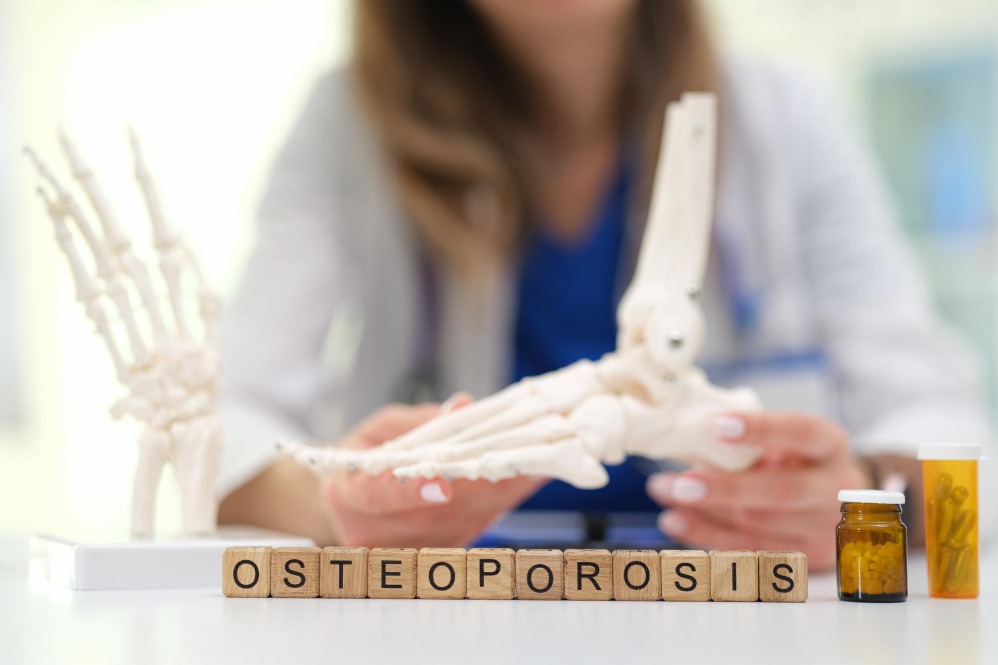
Osteoporosis can remain unnoticed for years because weakening bones do not necessarily cause pain. For some people, the first clear sign is a fracture after a relatively minor fall or everyday incident.
This makes osteoporosis treatment different from treating ordinary joint pain. The goal is not simply to relieve symptoms. Management involves evaluating bone strength, identifying relevant risk factors, reducing future fracture risk and helping patients remain safely mobile.
For older adults and their families in Noida, recognizing when a bone-health assessment is appropriate can be particularly valuable after a low-trauma fracture.
What Happens in Osteoporosis?
Bone is living tissue that is continually renewed. With osteoporosis, bone strength decreases and the skeleton becomes more vulnerable to fractures.
Common sites of osteoporotic fractures include the:
- Hip
- Spine
- Wrist
A vertebral fracture may sometimes present as sudden back pain, while other spinal compression fractures may be less obvious.
Who Should Discuss Bone Health With a Doctor?
Age is an important risk factor, but it is not the only consideration.
A clinician may review factors such as previous low-trauma fractures, family history, certain medications, medical conditions, body weight, smoking or alcohol history, nutritional factors and other contributors to reduced bone strength.
A fracture occurring after a minor fall in an older adult can be particularly important because treating the broken bone without considering underlying bone health may miss an opportunity for secondary fracture prevention.
How Is Osteoporosis Evaluated?
Assessment may include medical history, examination and bone-density testing when clinically appropriate.
Blood investigations may also be considered to identify factors affecting bone metabolism or to help guide treatment.
The purpose is not simply to produce a bone-density number. Clinical fracture risk depends on multiple factors that need to be interpreted together.
What Can Treatment Include?
Management is individualized.
Depending on the patient's assessment, treatment may involve attention to calcium and vitamin D status, appropriate nutrition, exercise, fall prevention and osteoporosis medication when indicated.
Different medicines work in different ways and are not interchangeable for every patient. Treatment selection can depend on fracture history, bone-density findings, other medical conditions, kidney function and overall risk profile.
Patients should also understand the duration, monitoring requirements and correct use of any prescribed therapy.
Fall Prevention Is Part of Fracture Prevention
Medication alone does not address every source of fracture risk.
Older adults and their families can review the home for avoidable hazards such as:
- Loose rugs
- Poor lighting
- Slippery bathroom surfaces
- Unstable footwear
- Cluttered walking routes
- Lack of suitable support where required
Vision, balance, muscle strength and medications that contribute to dizziness may also deserve consideration.
Exercise Needs to Match the Individual
Appropriate physical activity can support strength, balance and general function.
However, someone with established osteoporosis or a previous vertebral fracture may require modifications to particular exercises.
Exercise recommendations should therefore reflect fracture history, mobility and overall health rather than relying on a generic fitness programme.
When Is Orthopedic Assessment Particularly Relevant?
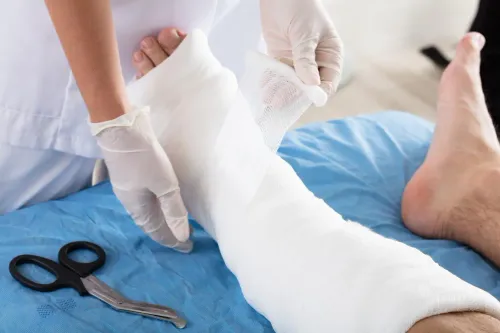
An orthopedic evaluation may be appropriate when osteoporosis is associated with a fracture, persistent pain following a fall, loss of mobility, suspected vertebral compression injury, or another musculoskeletal problem.
Dr. A.K. Sharma, Ortho and Joint Replacement Surgeon can assess fractures and orthopedic consequences of reduced bone strength while helping determine the next steps in musculoskeletal care.
For families across Noida and nearby Uttar Pradesh communities, it is also useful to bring previous fracture records, scans, bone-density reports and a current medication list to the consultation.
Think Beyond the First Fracture
One of the most important readiness indicators for osteoporosis care is recognizing that a low-trauma fracture may represent more than an isolated accident.
A wrist fracture, hip fracture or vertebral fracture in an older adult can prompt evaluation of future fracture risk.
Good osteoporosis management therefore combines bone-health assessment, appropriate medical treatment, safer movement, fall-risk reduction and follow-up. The objective is not to make unrealistic promises that fractures can always be prevented. It is to identify modifiable risks and use appropriate measures to reduce the likelihood of future injury while supporting independence and mobility.