A torn ACL can make the knee feel unstable even after the initial pain and swelling begin to improve. Patients may feel comfortable while walking straight but experience sudden instability when turning, pivoting, or returning to sports.
For active patients in Noida, ACL surgery for knee injury is often considered when instability affects normal activity, sporting performance, or long-term knee function.
What Is the ACL?
The anterior cruciate ligament is one of the major stabilizing ligaments inside the knee.
It helps control:
- Forward movement of the shin bone
- Rotational stability
- Pivoting
- Direction changes
- High-demand knee movement
ACL injuries are common in sports involving sudden turning, landing, or contact.
How Does an ACL Injury Usually Happen?
The ligament may tear during:
- Football
- Cricket
- Basketball
- Badminton
- Running
- Gym training
- Sudden twisting
- Awkward landing
- Road accidents
Some patients feel or hear a pop at the time of injury.
Swelling often develops quickly.
Does Every ACL Tear Need Surgery?
No.
Treatment depends on:
- Degree of instability
- Activity level
- Age
- Sporting goals
- Occupation
- Associated meniscus injury
- Other ligament damage
- Knee function
Someone with lower activity demands and good functional stability may sometimes be managed conservatively.
A competitive or recreational athlete who repeatedly experiences knee giving-way may require a different approach.
When Is ACL Surgery Considered?
Reconstruction may be discussed when:
- The knee remains unstable
- The patient wants to return to pivoting sports
- Repeated giving-way episodes occur
- Other knee structures are also injured
- Functional limitations remain despite rehabilitation
The decision should be individualized rather than based only on MRI findings.
What Happens During Reconstruction?
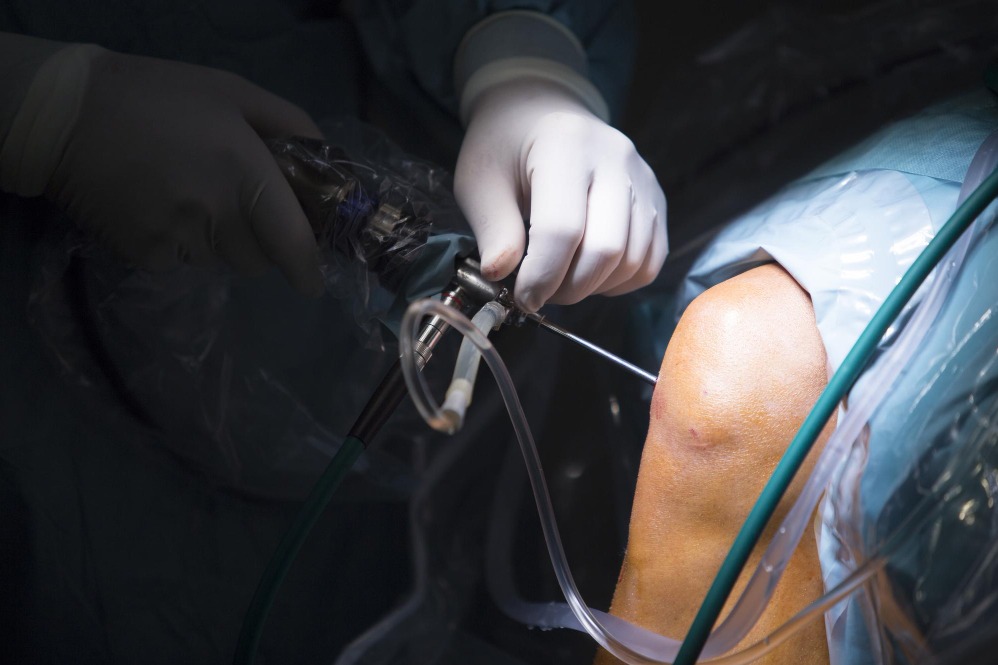
In most cases, the damaged ACL is reconstructed using a tendon graft.
The graft may come from different tendon sources depending on the surgical plan.
The aim is to restore functional stability to the knee.
Rehabilitation Begins Before Return to Sport
Surgery alone does not restore athletic function.
Rehabilitation usually progresses through stages involving:
- Swelling control
- Restoration of knee movement
- Muscle strengthening
- Balance training
- Functional movement
- Running progression
- Jumping and cutting drills
- Return-to-sport testing
Patients should not assume that passing a fixed number of months automatically means the knee is ready for sport.
What Can Delay Recovery?
Common issues include:
- Returning to activity too early
- Ignoring physiotherapy
- Poor quadriceps strength
- Persistent swelling
- Limited knee movement
- Recurrent instability
- Associated meniscus or cartilage injury
Recovery should be based on function rather than calendar time alone.
When Should an ACL Injury Be Assessed?
Seek orthopedic evaluation if the knee:
- Gives way repeatedly
- Swells after activity
- Feels unstable during turns
- Cannot fully bend or straighten
- Prevents return to sport
- Remains painful after rehabilitation
Dr. A.K. Sharma, Ortho and Joint Replacement Surgeon evaluates knee ligament injuries in Noida and surrounding Delhi NCR areas.
ACL reconstruction is most useful when there is a clear relationship between ligament instability and the patient's functional demands. The goal is not simply to repair an MRI finding but to restore a stable knee that can safely handle everyday or sporting activity.