Persistent knee pain can gradually reduce independence. Walking becomes slower, stairs feel harder, and even getting up from a chair may require extra effort. When knee arthritis or advanced joint damage begins to interfere with everyday life despite appropriate conservative treatment, knee replacement surgery treatment may be considered.
For patients in Noida, Uttar Pradesh, the decision to undergo knee replacement should be based on symptoms, joint damage, mobility limitations, overall health, and response to previous treatment rather than age alone.
When Is Knee Replacement Surgery Considered?
Knee replacement is usually evaluated when the joint has developed significant structural damage.
Common indications may include:
- Persistent pain during walking
- Severe stiffness
- Recurrent swelling
- Difficulty climbing stairs
- Pain while resting or sleeping
- Reduced walking distance
- Progressive knee deformity
- Difficulty completing normal daily activities
An orthopedic surgeon also looks at how much the condition affects quality of life.
What Causes Severe Knee Joint Damage?
Osteoarthritis is one of the most common causes. Over time, cartilage inside the knee can wear down, causing pain and reduced movement.
Other possible causes include:
- Rheumatoid or inflammatory arthritis
- Previous knee injuries
- Post-traumatic arthritis
- Joint deformity
- Certain long-term joint disorders
X-rays are commonly used to understand the pattern and severity of damage.
Is Surgery the First Option?
Not usually.
Depending on the stage of knee disease, earlier treatment may include physiotherapy, activity modification, medication, strengthening exercises, walking support, and weight management where appropriate.
Surgery becomes more relevant when suitable conservative measures are no longer providing adequate symptom control and daily function continues to deteriorate.
What Happens During Knee Replacement?
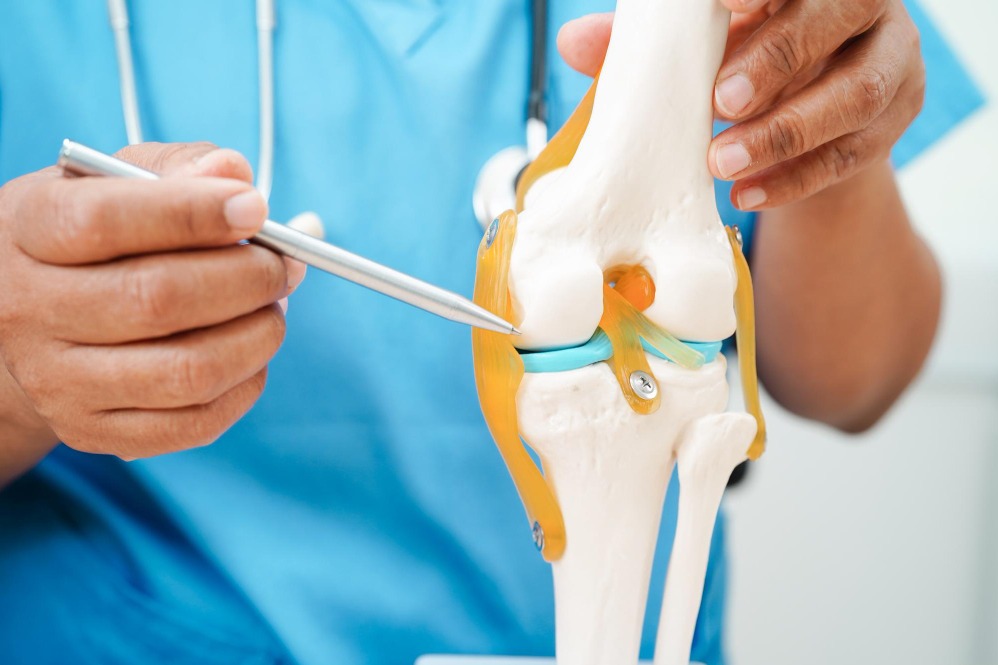
During surgery, damaged joint surfaces are prepared and replaced with artificial components.
The exact surgical plan can vary depending on:
- Joint damage
- Knee alignment
- Bone condition
- Ligament stability
- Patient anatomy
- Overall medical fitness
The procedure aims to improve joint function and reduce pain caused by severely damaged surfaces.
Preparing Before Surgery
Preoperative preparation can influence recovery.
Patients may undergo blood tests, medical evaluation, imaging, and assessment of conditions such as diabetes, hypertension, or heart disease.
It is also useful to prepare the home for the early recovery period.
Consider:
- Removing loose rugs
- Creating clear walking pathways
- Arranging support for daily tasks
- Keeping commonly used items within easy reach
- Preparing appropriate seating
What Happens After Surgery?
Recovery begins gradually.
Patients are usually encouraged to begin controlled movement under medical guidance. Physiotherapy helps restore knee motion, muscle strength, walking ability, and confidence.
Recovery speed varies.
Factors that can affect progress include:
- Age
- General health
- Preoperative muscle strength
- Other joint problems
- Adherence to rehabilitation
- Surgical complexity
What Should Patients Ask Before Proceeding?
Useful questions include:
- How advanced is my knee damage?
- Are any nonsurgical options still appropriate?
- Why is replacement being recommended now?
- What type of implant is being considered?
- What are the important risks?
- What will rehabilitation involve?
- When can walking and everyday activities gradually resume?
Dr. A.K. Sharma, Ortho and Joint Replacement Surgeon evaluates knee problems for patients in Noida and surrounding NCR areas based on symptoms, examination, mobility, and imaging findings.
Knee replacement should not be viewed simply as an operation for older age. It is a treatment considered when severe joint damage meaningfully affects daily function and other suitable options are no longer providing enough relief.