Hearing that a fracture may require surgery can raise immediate questions: Why will a cast not work? What needs to be fixed? Will plates or screws remain permanently? How long will recovery take?
Fracture surgery treatment is not required for every broken bone. It is considered when the characteristics of an injury make operative stabilization a reasonable option for restoring alignment, stability or function.
Understanding why surgery has been recommended can help patients and families participate more confidently in treatment decisions.
Why Can Some Fractures Heal Without Surgery?
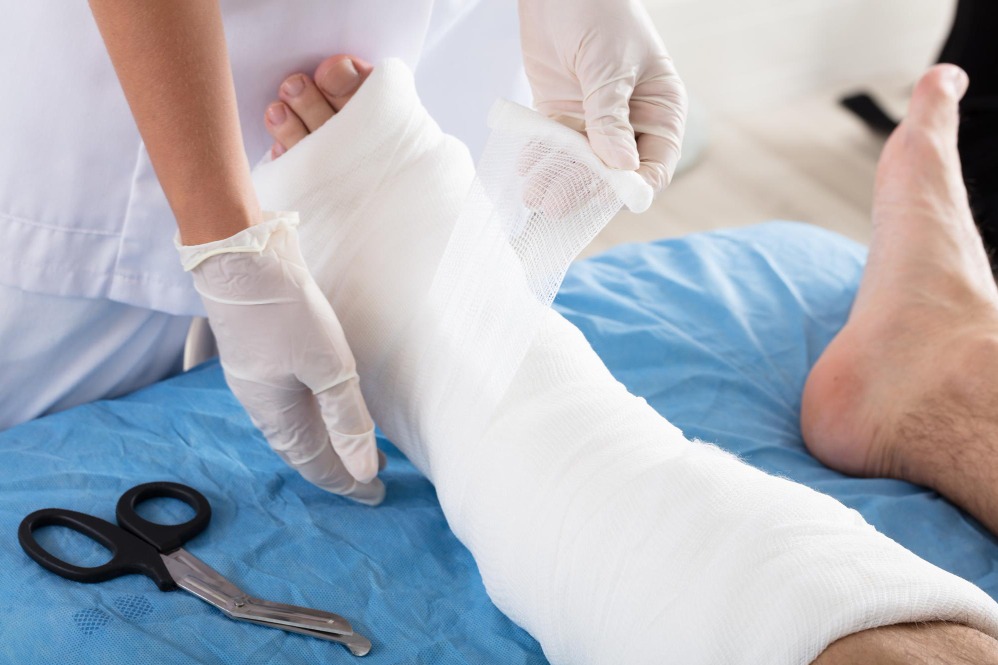
If a fracture is stable and the bone fragments are positioned acceptably, immobilization may allow natural healing while maintaining suitable alignment.
Depending on the injury, treatment may involve a cast, splint, brace, or other support.
Regular follow-up can be necessary to ensure that the fracture remains appropriately positioned while healing progresses.
What Makes Surgery More Likely?
The decision depends on the exact injury.
Surgical fixation may be considered in circumstances involving:
- Significant displacement
- Unstable fracture patterns
- Certain fractures extending into a joint
- Open fractures
- Some fractures that cannot maintain acceptable alignment
- Selected hip or long-bone fractures
- Multiple injuries
- Certain fractures associated with vascular or nerve concerns
- Failure of appropriate conservative treatment
This is not an exhaustive list. The same bone can fracture in several different patterns requiring different management.
What Does Fixation Mean?
Fracture surgery may use implants such as plates, screws, nails, wires or other devices to stabilize bone fragments.
The choice depends on the fracture location, pattern, bone quality and mechanical requirements.
The purpose of fixation is not merely to place metal in the body. It is to provide sufficient stability and alignment for the bone and surrounding tissues to recover under an appropriate rehabilitation plan.
Questions to Ask Before Surgery
Patients should understand the reasoning behind the recommendation.
Consider asking:
- What type of fracture do I have?
- Is it displaced or unstable?
- Does it involve a joint?
- What could happen if it is treated without surgery?
- What fixation method is being considered?
- What are the important risks?
- When can movement begin?
- When can weight-bearing begin?
- Will physiotherapy be required?
- What follow-up imaging will be needed?
Clear answers can make expectations much more realistic.
Medical Readiness Matters Too
The fracture is not the only consideration before surgery.
The treating team may evaluate medications, allergies, diabetes, blood pressure, heart or respiratory conditions, previous surgeries and other relevant health factors.
Older adults may require additional medical optimization depending on the injury and overall condition.
Patients should provide an accurate medication list, particularly when taking blood-thinning medicines or other drugs that may influence perioperative planning.
What Happens After Fixation?
Recovery depends heavily on the fracture.
Some surgically stabilized fractures may permit relatively early controlled movement, while others require restrictions to protect healing.
Postoperative care can involve:
- Wound monitoring
- Pain management
- Swelling control
- Appropriate movement
- Weight-bearing instructions
- Physiotherapy
- Follow-up X-rays
- Gradual return to work and normal activities
Patients should follow instructions for their own fracture rather than comparing recovery with someone who had a different injury.
Selecting Orthopedic Care in Noida
When fracture surgery is being considered, provider selection should focus on accurate diagnosis, clear explanation of treatment options, appropriate surgical planning and structured postoperative follow-up.
Dr. A.K. Sharma, Ortho and Joint Replacement Surgeon evaluates fracture patterns and their functional implications before determining whether conservative care or operative fixation is appropriate.
For patients in Noida and neighbouring parts of Uttar Pradesh, readiness for fracture surgery means more than choosing a hospital date. It means understanding why fixation is required, knowing the recovery restrictions, addressing relevant medical conditions and planning for follow-up.
The most useful surgical recommendation is one that clearly connects the fracture pattern with the reason an operation is expected to offer an appropriate clinical advantage.