For an older adult, the value of hip replacement depends on persistent pain, lost independence, medical fitness and the likelihood of completing rehabilitation—not on age or an X-ray alone. By weighing non-surgical care, expected benefits, personal risks, recovery demands and hospital arrangements, you can decide whether surgery is reasonable and what to ask before committing.
Key takeaways
- Consider surgery when hip pain limits sleep, walking, stairs, or independence.
- Confirm arthritis severity with examination and weight-bearing hip X-rays.
- Compare surgeon experience, hospital safety systems, rehabilitation, and follow-up access.
- Balance expected pain relief against surgical risks, recovery time, and personal goals.
When does hip replacement become worth considering?
Hip replacement becomes reasonable when substantial hip pain continues despite appropriate treatment and limits sleep, walking, stairs, dressing, household tasks or independence. Persistent rest or night pain, a shorter walking distance, a painful or stiff hip on examination, and arthritis or other damage on imaging strengthen the case.
Your goals matter too; age alone does not decide whether surgery is worthwhile.
Use this checklist with your clinician:
- Confirm that the hip, rather than the spine, knee or another condition, is causing the symptoms.
- Review exercise or physiotherapy, walking aids, safe medicines and other suitable non-surgical care.
- Discuss whether pain relief, improved walking and easier daily activities justify surgical recovery.
- Set realistic goals: hip replacement benefits do not include a completely normal hip, removal of back or knee pain, or unlimited activity.
- Seek a second opinion when pain is manageable, symptoms are atypical, or the recommendation depends mainly on an X-ray.
| Option | What proceeding looks like | When it fits |
|---|---|---|
| Hip replacement | Major surgery with recovery, risks and activity limits, but likely relief from arthritis pain and improved function | Pain remains disabling despite appropriate care |
| Conservative care | Continue tailored exercise, aids, medicines or selected injections while monitoring function | Pain is manageable and independence remains acceptable |
| Second opinion | Recheck the diagnosis, examination, images and alternatives before deciding | Symptoms do not match the X-ray or the pain source is uncertain |
Ask, “Is hip replacement worth it in Noida?” only after comparing these choices with your own pain, mobility, health and priorities—not with the X-ray alone.
How is the diagnosis confirmed, and which hip arthritis surgery options come first?
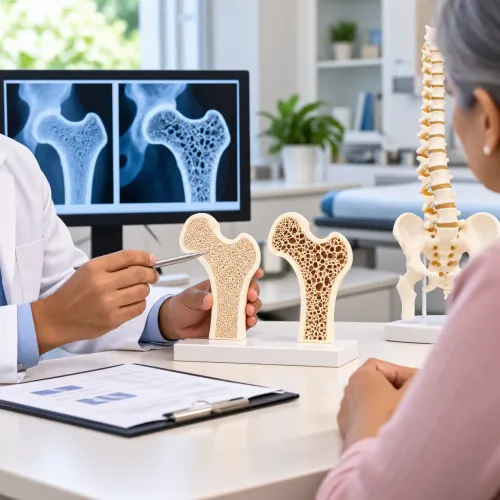
Diagnosis starts with a history: where the pain lies, what triggers it, night or rest pain, stiffness, injury, fever and effects on walking, stairs and dressing. The clinician examines hip movement, strength, the spine and knee, watches you walk, checks leg length and orders weight-bearing pelvic or hip X-rays.
MRI helps find avascular necrosis, an occult fracture, cartilage damage or soft-tissue disease when X-rays do not explain symptoms. Blood tests are needed when infection or inflammatory arthritis is suspected.
| Option | What it involves | When it applies or is unsuitable |
|---|---|---|
| Exercise and physiotherapy | Strengthening, mobility and aerobic work | First for many patients; unsuitable when pain prevents safe participation until symptoms are controlled |
| Cane or walker | Reduces load and improves balance | Useful for painful walking or weakness; insufficient for severe structural arthritis alone |
| Weight management, medicines and injections | Weight reduction, topical or oral medicines when safe, and selected injections | Helps symptom control; medicines may be unsafe with kidney, stomach or heart disease, and injections do not repair advanced damage |
| Hip resurfacing | Caps the femoral head and preserves more bone | Consider only with suitable bone quality; poor bone, osteoporosis and many older patients make it unsuitable |
| Total hip replacement | Replaces both the femoral head and socket | Main operation for end-stage arthritis; requires surgical risk and recovery to be acceptable |
Arthroscopy is not a dependable alternative for established osteoarthritis. Hemiarthroplasty replaces only the femoral head and is used more often for selected fractures, not routine elective arthritis.
What should you expect during surgery and the first months afterward?
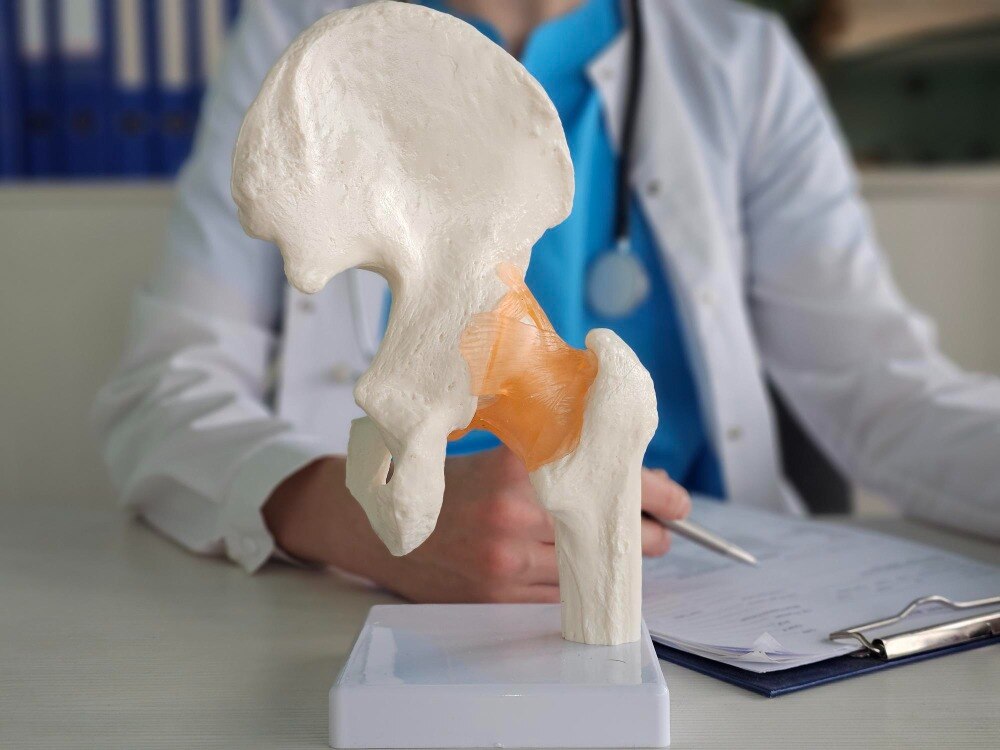
The surgeon removes the damaged femoral head and places a metal or ceramic ball on the thighbone. A metal cup with a plastic, ceramic or metal liner replaces the worn socket, creating a new joint. Spinal anaesthesia, general anaesthesia, or both may be used.
Staff monitor blood pressure, oxygen, pain, bleeding, urine output, wound condition and early movement; the hospital stay depends on recovery, medical conditions and home support.
Walking usually begins soon after surgery with a physiotherapist. The hip replacement benefits—less arthritis pain and easier daily movement—arrive gradually, not immediately. Expect a walker first, then a cane when balance and strength improve; physiotherapy continues for weeks to months.
Prepare your home before admission:
- Arrange a raised toilet seat, firm high chair, caregiver help and home physiotherapy if travel is difficult.
- Remove loose rugs, clutter and trailing wires; keep essentials within easy reach.
- Practise stairs only with physiotherapy instruction and the recommended sequence.
- Keep the dressing clean and dry, and bathe only after the wound is safe and the surgical team approves it.
- Take prescribed blood-thinning medicine, use compression if advised, perform ankle exercises and walk regularly to reduce clot risk.
- Ask before lifting, cooking or shopping; accept help with household tasks initially. Drive only after medical clearance and when you can control the vehicle safely.
- Return gradually to low-impact activities such as walking, cycling or swimming. Seek urgent help for fever, increasing drainage, severe pain, calf swelling, sudden breathlessness or chest pain.
How can you compare a hip replacement surgeon and hospital in Noida?
Choose a hip replacement surgeon in Noida by checking records and outcomes, not by relying on online ratings. A consultation with Dr.A.K.Sharma-Ortho & joint replacement surgeon is one opportunity to obtain patient-specific answers, not evidence that surgery suits every older adult.
- Verify recognised orthopaedic training and current registration with the National Medical Commission or Uttar Pradesh Medical Council. Ask who will perform each part of the operation.
- Ask how many primary and revision hip replacements the surgeon performs each year. Request the hospital’s own rates for infection, readmission, dislocation, thromboembolism and revision; national averages cannot predict one hospital’s results.
- Request the implant brand, exact model, bearing surface and fixation plan. Ask why cemented, uncemented or hybrid fixation fits your bone quality and fracture risk.
- Require a written estimate listing exclusions: tests, medicines, physiotherapy, extra hospital days and treatment for complications.
- Confirm anaesthesia, on-site imaging, infection-control procedures, emergency fracture care and blood-clot prevention and treatment. Ask who handles problems after hours.
- Get written follow-up dates, physiotherapy access, discharge instructions and a plan for assessing or revising the implant later.
| Fixation choice | What it means | Question to ask |
|---|---|---|
| Cemented | Bone cement secures the implant | Why does this suit my fracture risk? |
| Uncemented | Bone grows onto the implant | Is my bone strong enough for initial stability? |
| Hybrid | Cemented and uncemented components are combined | Why is this combination preferable for my hip? |
Related service
Restore Mobility and Live an Active Life with Hip Replacement in Noida At Global Orthopaedics and Speciality Clinics, we specialize in helping... View service → |
What personal checklist should decide whether you proceed?
The hip replacement decision should match your symptoms, health and support—not your age or an X-ray alone. Pain from the spine, knee or bursitis, an untreated infection, or unoptimised medical illness makes immediate replacement the wrong choice. Ask the surgeon to explain alternatives and revision planning.
That is the practical answer to “is hip replacement worth it in Noida?”
- Ask whether frailty, memory problems, nutrition, anaemia, smoking, obesity, diabetes control, heart, lung or kidney disease changes your risk.
- Ask which medicines need adjustment before anaesthesia, and how infection, anaemia, glucose control and nutrition will be improved.
- Plan travel time, Noida traffic, parking, caregiver availability, home access, physiotherapy and what you will do if a complication occurs after discharge.
- Compare the likely benefit with recovery effort and complication risk before deciding.
| Current problem | Recovery and risk to discuss |
|---|---|
| Pain and night waking | Weeks to months of exercises, walking aids and help at home |
| Walking or stair limits | Early walking, then improving strength, balance and endurance |
| Lost independence | Bathing, dressing and household support during recovery |
| Response to non-surgical care | Benefit of surgery versus continued treatment or a second opinion |
After surgery, seek urgent help for fever or increasing wound drainage, severe or worsening pain, calf swelling, sudden breathlessness, chest pain, new leg weakness or a hip that feels dislocated.
Frequently asked questions
When is hip replacement worth considering for an older adult?
Consider it when substantial hip pain continues despite appropriate treatment and restricts sleep, walking, stairs, dressing, household tasks, or independence. Rest or night pain and confirmed joint damage strengthen the decision.
How is the need for hip replacement confirmed?
An orthopaedic assessment reviews symptoms, walking pattern, hip movement, strength, and pain. Weight-bearing X-rays usually show joint-space loss, bone spurs, deformity, or other damage; additional tests are ordered when another diagnosis is possible.
What hip arthritis surgery options should be considered first?
Discuss non-surgical care first when symptoms remain manageable, including activity changes, physiotherapy, walking aids, weight management, and appropriate medicines. When pain and disability persist, total hip replacement is the established option for severe joint damage; hip-preserving procedures suit only selected patients.
How should you compare a hip replacement surgeon and hospital in Noida?
Ask about the surgeon’s training, experience with your condition, implant choices, complication prevention, anaesthesia, rehabilitation plan, total costs, and follow-up access. Visit a hospital with appropriate imaging, infection-control systems, emergency support, and physiotherapy.
What should you consider before deciding on hip replacement?
Review pain severity, daily limitations, medical conditions, dental or skin infections, medicines, home support, transport, rehabilitation time, financial coverage, and the activities you want to resume. Make the decision with your orthopaedic surgeon after discussing benefits and risks.
Keywords