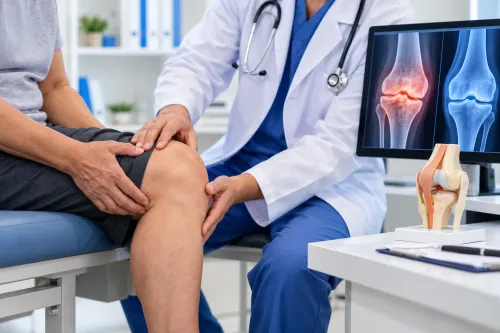
Knee pain after twisting, squatting, sports, or an awkward movement may sometimes be related to a meniscus injury. The menisci are two crescent-shaped structures within the knee that contribute to load distribution, stability, and joint function.
When a tear is identified, patients often assume that an operation is inevitable. In practice, the treatment of a meniscus tear depends on the type of tear, its location, symptoms, age of the patient, associated injuries, and overall condition of the knee.
That makes understanding meniscus repair surgery particularly important before making treatment decisions.
What Does a Meniscus Tear Feel Like
Meniscus injuries do not produce exactly the same symptoms in every patient.
Possible signs include:
- Pain along the joint line
- Swelling after activity
- Difficulty fully bending or straightening the knee
- Clicking or catching
- Pain during twisting or squatting
- A sensation that the knee locks
- Reduced confidence during movement
Some tears occur suddenly during sport. Others develop in a knee that already has age-related degenerative changes.
This distinction can influence treatment.
How Is a Meniscus Injury Confirmed
An orthopedic assessment usually starts with understanding how symptoms began.
Physical examination can identify areas of tenderness, assess knee movement, and evaluate whether ligaments are also injured. MRI can provide detailed information about the meniscus and other soft tissues.
However, treatment is not based on an MRI phrase alone.
A tear visible on imaging may not always be responsible for a patient's symptoms. Imaging therefore needs to be interpreted alongside clinical findings.
Can a Torn Meniscus Heal Without Surgery
Some tears may be managed without an operation, depending on their characteristics and symptoms.
Conservative treatment can include temporary activity modification, physiotherapy, strengthening, and other measures selected after evaluation.
The meniscus has different zones with different blood supplies. Certain tears, particularly those in areas with better blood supply and suitable tissue quality, may have greater potential for repair.
Other tears may not be suitable for repair.
Repair and Removal Are Not the Same
Patients sometimes use 'meniscus surgery' as a single term, but procedures can differ.
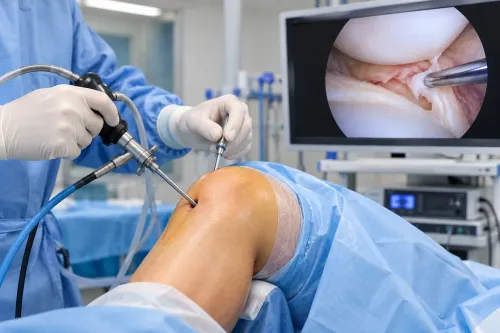
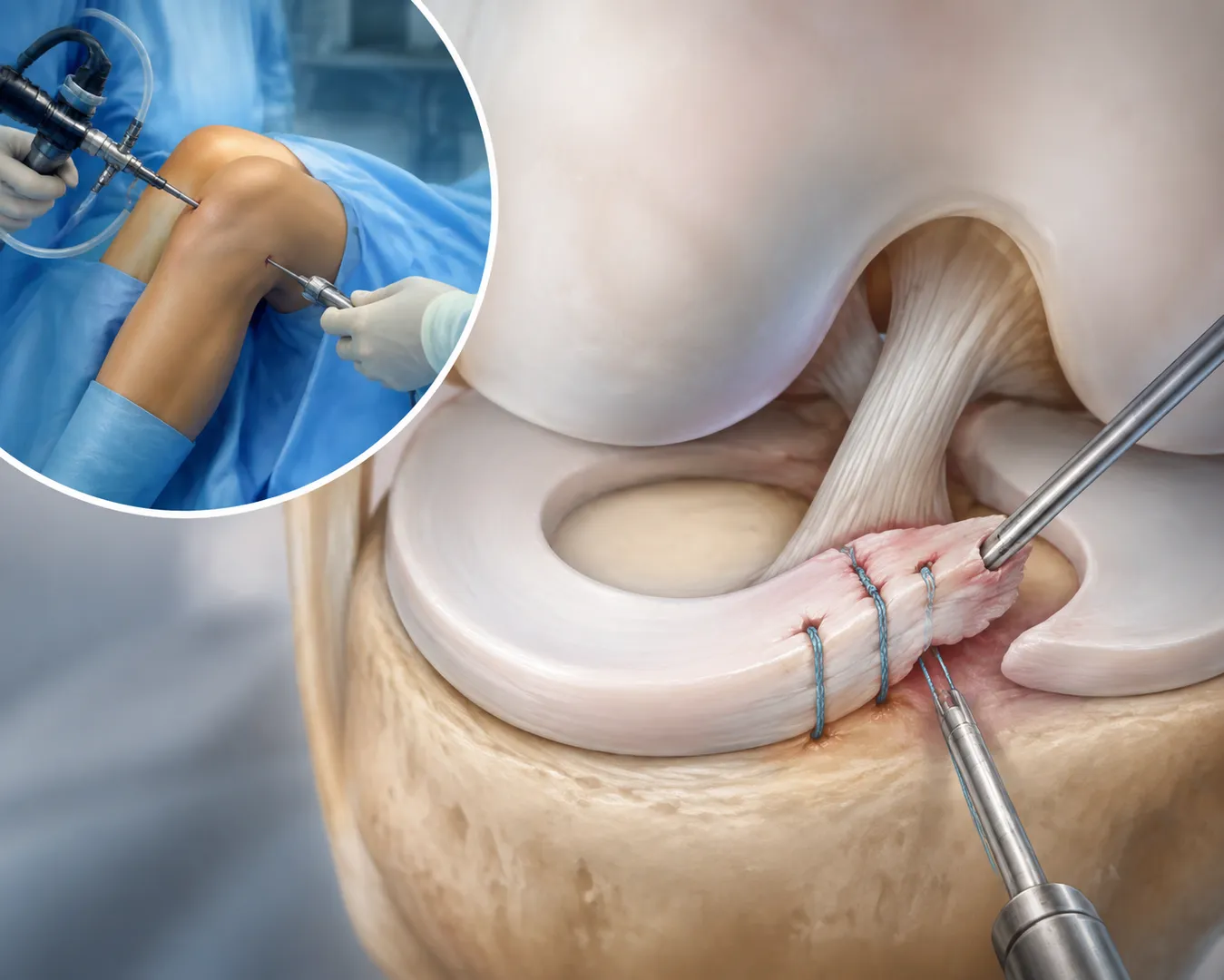
When appropriate, repair aims to preserve meniscal tissue by fixing the tear so it can heal. In other situations, damaged unstable tissue may require a different arthroscopic procedure.
Preserving functional meniscal tissue is desirable when clinically feasible because the meniscus has an important role in the knee.
Whether repair is possible depends on factors including:
- Tear pattern
- Tear location
- Tissue quality
- Time since injury
- Patient age and activity profile
- Associated ACL or ligament injuries
- Presence of arthritis
This is why two patients with 'meniscus tears' may receive different recommendations.
What Happens After Meniscus Repair
Rehabilitation following meniscus repair surgery needs to protect healing tissue while progressively restoring knee function.
Depending on the repair and individual case, temporary restrictions may be placed on weight bearing, knee bending, or certain activities.
Later rehabilitation focuses on movement, muscle strength, balance, and functional control.
A patient should not compare recovery directly with someone who underwent a different type of knee arthroscopy. Repair may require a more protective rehabilitation period because the repaired tissue needs time to heal.
When Should Knee Symptoms Be Evaluated
Persistent swelling, repeated locking, inability to fully straighten the knee, instability, or ongoing pain after an injury warrants orthopedic assessment.
Severe pain following trauma, inability to bear weight, or obvious deformity requires more urgent evaluation because fractures and other significant injuries need to be excluded.
For patients considering meniscus repair surgery in Noida, Dr. A.K. Sharma – Ortho and Joint Replacement Surgeon can assess the tear pattern, symptoms, knee stability, imaging findings, and activity requirements before recommending an appropriate management plan.
For active patients across Noida and nearby parts of Uttar Pradesh, the objective should not simply be returning to activity as quickly as possible. It should be returning with adequate healing, strength, mobility, and knee control while preserving healthy joint structures whenever clinically appropriate.
Keywords