A meniscus tear is a common knee injury, but the words “meniscus tear” on an MRI report do not by themselves determine whether surgery is required.
The menisci are cartilage structures inside the knee that contribute to load distribution, stability and joint function. Tears can occur suddenly during twisting injuries or develop gradually as the tissue changes with age.
Understanding meniscus surgery treatment therefore starts with identifying the type of tear, the patient's symptoms and how the knee is functioning.
How Does a Meniscus Tear Happen?
In younger or physically active individuals, tears may occur during sports or movements involving twisting on a planted foot.
Activities involving squatting, turning, jumping or sudden changes of direction may contribute to traumatic injuries.
In older adults, degenerative changes can make the meniscus more vulnerable. A relatively minor movement may then trigger symptoms.
What Does a Meniscus Injury Feel Like?
Symptoms can vary substantially.
Possible signs include:
- Pain along the knee joint line
- Swelling
- Pain during twisting
- Difficulty with deep bending
- Clicking or catching sensations
- Reduced range of motion
- Difficulty fully straightening the knee
Some people experience mechanical locking, where the knee cannot move normally because tissue interferes with joint motion. This deserves timely clinical assessment.
An MRI Finding Is Only Part of the Picture
MRI can provide useful information about the location and pattern of a meniscal tear and associated structures within the knee.
However, imaging should be interpreted alongside symptoms and physical examination.
A tear visible on imaging may not always be the main source of pain, particularly when age-related knee changes are also present. Conversely, a significant traumatic tear may have important implications for an active patient.
When Can Nonsurgical Care Be Considered?
Depending on the tear and symptoms, initial management may involve activity modification, appropriate pain management, physiotherapy and progressive strengthening.
The aim is to reduce symptoms while restoring movement and function.
Some meniscal problems can settle sufficiently without an operation. This is why immediate surgery based only on an imaging report may not always be appropriate.
When Might Surgery Enter the Discussion?
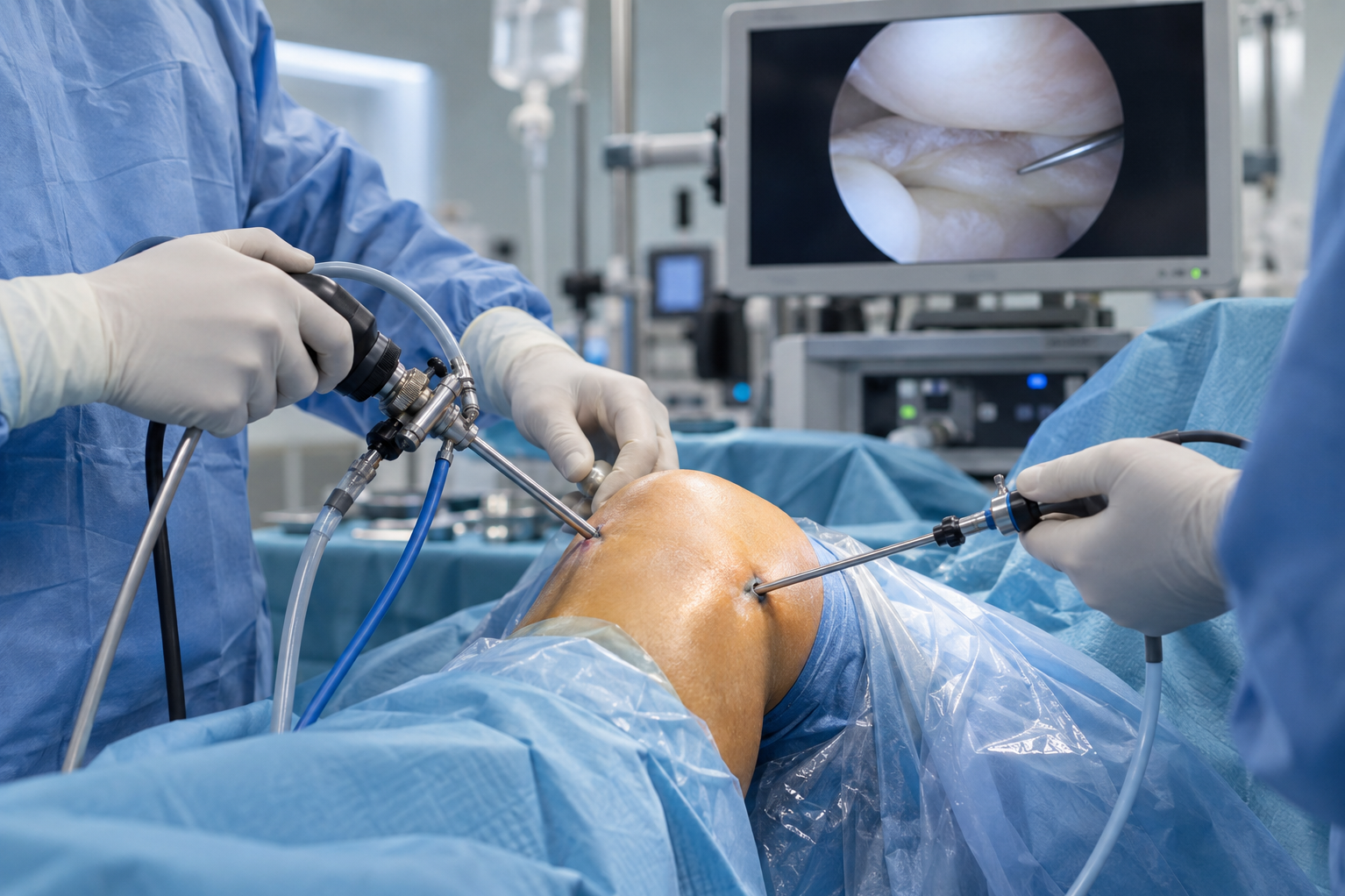
Surgery may be considered when the characteristics of the tear and clinical symptoms suggest that an operative approach could be beneficial.
Factors may include persistent mechanical symptoms, certain traumatic tears, associated ligament injuries, failure of appropriate conservative management, or significant restriction of knee function.
The patient's age, activity goals, cartilage condition and tear location also matter.
Repair and Removal Are Not the Same
One important distinction is between meniscal repair and partial removal of damaged tissue.
When technically possible and clinically appropriate, preserving meniscal tissue may be desirable because the meniscus plays an important role in knee mechanics.
Whether a tear can be repaired depends on factors such as its location, pattern, tissue quality and blood supply.
Not every tear is repairable, and not every tear requires trimming. The treatment should match the actual injury.
Returning to Activity Requires More Than Pain Relief
After either conservative management or surgery, rehabilitation can focus on restoring:
- Knee movement
- Muscle strength
- Balance
- Functional control
- Confidence during movement
- Sport-specific ability where relevant
The recovery pathway after a repair can differ from recovery following other meniscal procedures, so patients should follow individualized activity restrictions and rehabilitation guidance.
For people experiencing persistent knee symptoms after a sports injury, gym activity, fall, or twisting event in Noida, orthopedic assessment can help determine whether the meniscus is actually responsible for the problem.
The key is to avoid treating an MRI phrase instead of treating the patient. Symptoms, examination findings, tear characteristics and activity requirements together provide a much clearer basis for deciding whether meniscus surgery deserves consideration.