


Hip pain can make simple activities surprisingly difficult. Walking across a room, putting on shoes, getting into a car, standing after sitting, or sleeping comfortably may become challenging when the hip joint is significantly damaged.
For people exploring hip replacement treatment, understanding why surgery may be considered is important before focusing on implants, hospital stay, or recovery timelines.
Hip replacement is generally evaluated when structural joint disease causes substantial pain and loss of function despite appropriate nonsurgical management.
Where Does Hip Joint Pain Usually Occur?
The hip is a ball-and-socket joint. The upper end of the thigh bone forms the ball, while the pelvis forms the socket.
When the smooth joint surfaces become damaged, movement may become painful and restricted.
Hip-related pain may be experienced in the:
- Groin
- Front of the thigh
- Side of the hip
- Buttock
- Knee in some cases
Because pain around the hip can also arise from the spine, muscles, tendons, or other structures, determining its actual source is important.
Conditions That Can Damage the Hip
Osteoarthritis is one common reason for progressive hip joint deterioration. Other conditions may also affect the joint, including inflammatory arthritis, avascular necrosis, certain fractures, developmental problems, and previous injuries.
Symptoms may initially appear during prolonged walking or demanding activity. As joint disease progresses, discomfort can occur during shorter walks or even at rest.
How Is the Problem Assessed?
An orthopedic consultation typically examines both symptoms and physical function.
The surgeon may ask about:
- Duration and location of pain
- Walking distance
- Difficulty using stairs
- Night pain
- Previous injuries
- Current medications
- Earlier treatments
- Ability to perform routine activities
Physical examination helps assess hip movement, gait, leg function, tenderness, and other possible causes of symptoms.
X-rays are commonly used to evaluate structural changes. Other imaging may be considered where necessary.
When Are Nonsurgical Options Used?
Not every painful hip requires replacement.
Depending on the diagnosis and stage of disease, management may include appropriate medication, physiotherapy, activity modification, walking aids, exercises, and weight management where applicable.
The objective is not simply to postpone surgery at all costs. It is to use treatment that matches the severity of the condition and the patient's functional needs.
What Is Replaced During Surgery?
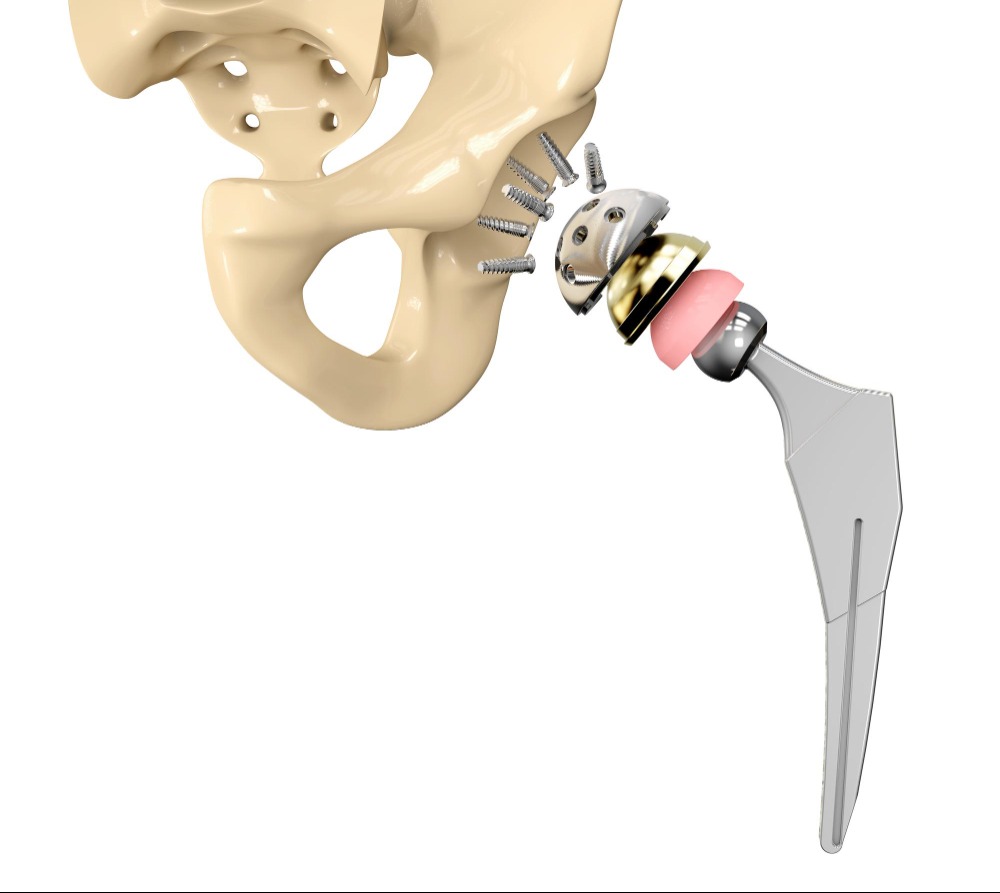
During total hip replacement, damaged portions of the ball-and-socket joint are replaced with prosthetic components.
Implant selection and surgical planning depend on several clinical factors, including bone quality, anatomy, age, activity requirements, and the surgeon's assessment.
Patients sometimes focus on finding a particular implant brand before understanding their own condition. Implant choice matters, but it is only one part of the overall treatment plan.
What Happens After Hip Replacement?
Mobilization and rehabilitation form an important part of postoperative care.
Recovery may involve walking assistance initially, exercises to improve strength and mobility, wound monitoring, precautions based on the surgical approach and individual circumstances, and scheduled follow-up.
The rate of progress differs from one person to another. Preoperative strength, overall health, severity of joint disease and other medical conditions can influence recovery.
Questions Worth Asking Before Treatment
Patients considering surgery can benefit from asking:
- What is causing my hip pain?
- How advanced is the joint damage?
- Are nonsurgical treatments still appropriate?
- Why is replacement being considered now?
- What type of procedure is suitable?
- What are the relevant risks?
- What should I expect during rehabilitation?
- When might normal activities gradually resume?
For residents of Noida and nearby parts of Uttar Pradesh, access to orthopedic evaluation makes it possible to address these questions before making a surgical decision.
Hip replacement should be based on a combination of clinical findings, imaging, pain severity and functional limitation. Understanding those factors allows patients and families to approach treatment with clearer expectations rather than viewing surgery as an automatic response to every form of hip pain.


