Pain on the outer side of the elbow can make surprisingly simple activities feel difficult. Holding a coffee mug, opening a door, lifting grocery bags, typing on a keyboard, or shaking hands may trigger discomfort. Although commonly associated with athletes, tennis elbow affects many people who have never played the sport.
Choosing the right tennis elbow treatment begins with understanding the condition, knowing when professional evaluation is necessary, and selecting an orthopedic specialist who focuses on identifying the root cause instead of only treating the symptoms.
What Exactly Is Tennis Elbow?
Tennis elbow, medically known as lateral epicondylitis, develops when the tendons connecting the forearm muscles to the elbow become irritated because of repetitive strain.
The condition is frequently seen in:
- Office professionals
- Electricians
- Carpenters
- Painters
- Mechanics
- Plumbers
- Gardeners
- Racquet sport players
- Gym enthusiasts
Repeated gripping, lifting, or twisting movements gradually overload the tendon, leading to pain and reduced function.
Symptoms That Suggest Professional Evaluation
Mild discomfort may improve with temporary rest, but persistent symptoms deserve orthopedic assessment.
Common signs include:
- Pain on the outside of the elbow
- Weak grip strength
- Pain while lifting objects
- Difficulty turning doorknobs
- Pain during computer mouse use
- Discomfort while writing
- Morning stiffness around the elbow
- Tenderness over the outer elbow
Ignoring symptoms for several months can make recovery slower and more challenging.
How Is Tennis Elbow Diagnosed?
Diagnosis usually begins with a detailed discussion of daily activities and work habits.
The evaluation may include:
- Medical history
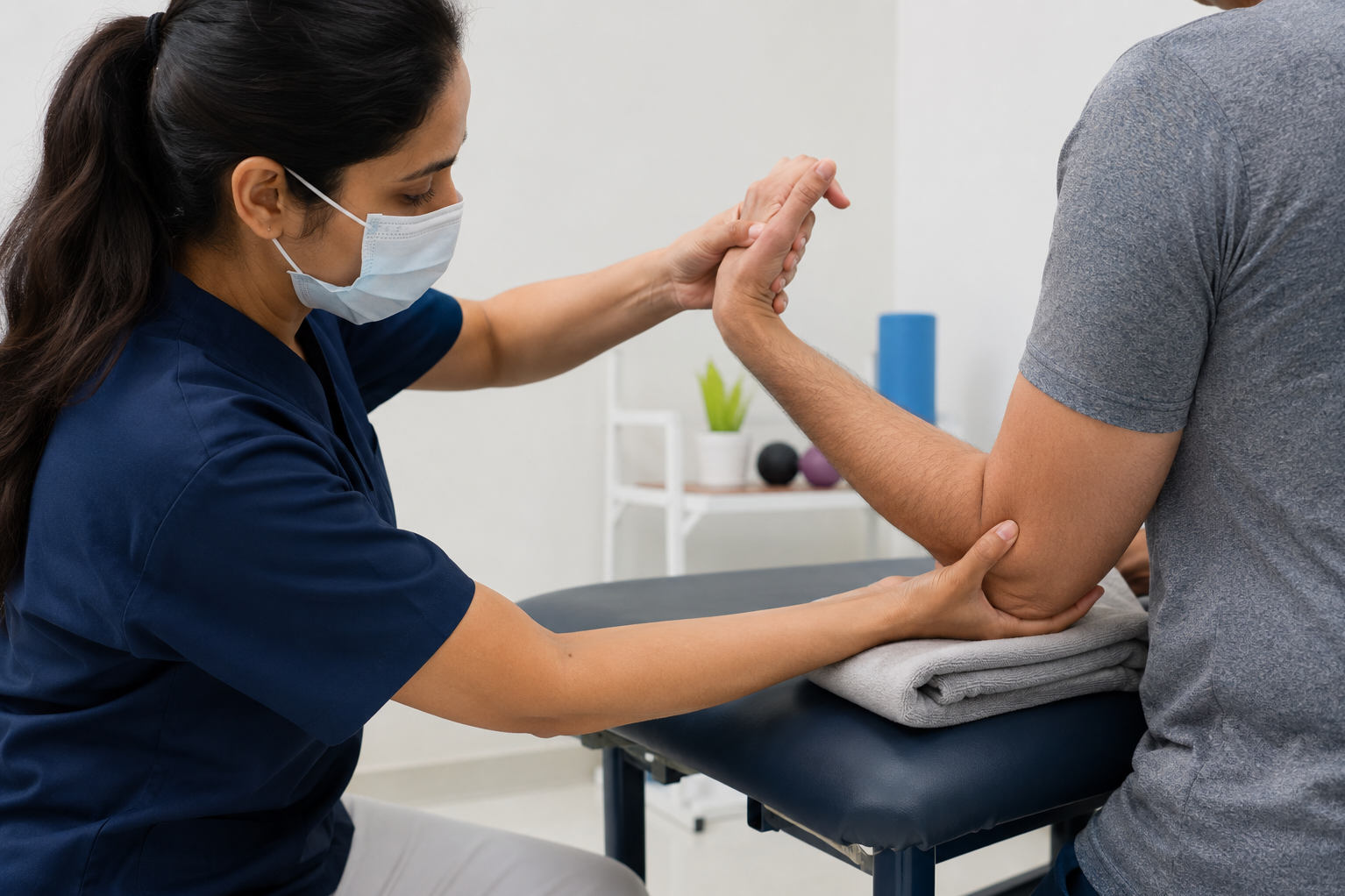
- Physical examination
- Grip strength assessment
- Movement testing
- Evaluation of wrist and forearm function
- Imaging studies when symptoms suggest other conditions
Accurate diagnosis helps distinguish tennis elbow from arthritis, nerve compression, ligament injuries, and cervical spine disorders that can produce similar pain.
Treatment Is Usually Conservative
Fortunately, most patients improve without surgery when treatment begins early.
Non-surgical management often includes:
- Activity modification
- Physiotherapy
- Stretching exercises
- Strengthening programs
- Anti-inflammatory medication
- Elbow braces when appropriate
- Ergonomic adjustments at work
The focus is on reducing tendon stress while gradually rebuilding strength.
When Might Surgery Be Recommended?
Surgery is considered only after prolonged conservative treatment has failed to improve symptoms.
Possible reasons include:
- Persistent pain lasting several months
- Significant tendon degeneration
- Severe functional limitation
- Inability to perform routine work
- Failure of structured rehabilitation
Even then, the decision is based on detailed clinical evaluation rather than symptoms alone.
Questions to Ask Before Starting Treatment
Before beginning any treatment plan, patients should understand their diagnosis and expected recovery.
Helpful questions include:
- What caused my elbow pain?
- Is the tendon damaged?
- Will physiotherapy be sufficient?
- How long will recovery take?
- What activities should I avoid?
- Can I continue working during treatment?
- What exercises will help prevent recurrence?
A clear understanding of the treatment plan encourages better participation and realistic expectations.
Finding Orthopedic Care in Noida
Repetitive work-related injuries have become increasingly common among professionals and skilled workers across Noida. Early orthopedic consultation helps patients receive targeted treatment before chronic tendon damage affects work performance or everyday activities.
Dr. A.K. Sharma, Ortho and Joint Replacement Surgeon evaluates patients with persistent elbow pain to identify the underlying cause and recommend individualized treatment based on symptom severity, activity level, and functional requirements. Care is focused on restoring movement while reducing the likelihood of recurrence.
Persistent elbow pain should never be ignored simply because it developed gradually. Timely diagnosis and appropriate tennis elbow treatment can help patients regain strength, improve daily function, and return to normal activities with greater comfort.