A sudden twist while playing sports or even an awkward movement during daily activities can injure the meniscus, one of the knee's most important shock absorbers. While some minor tears heal with conservative treatment, others continue causing pain, locking, or instability that affects everyday movement.
Understanding when meniscus tear surgery becomes necessary helps patients avoid unnecessary delays and protect long-term knee health.
What Is the Meniscus?
Each knee contains two crescent-shaped cartilage structures called the menisci. They cushion the joint, distribute body weight evenly, and reduce stress on the knee during movement.
A healthy meniscus helps with:
- Shock absorption
- Joint stability
- Smooth knee movement
- Protection of cartilage
- Load distribution
Damage to this structure can increase pressure on the knee joint and accelerate arthritis if left untreated.
Common Causes of a Meniscus Tear
Meniscus injuries occur across all age groups.
Typical causes include:
- Sports injuries
- Sudden twisting movements
- Squatting with heavy weight
- Falls
- Road traffic accidents
- Age-related cartilage degeneration
Older adults may develop tears during routine activities because the cartilage naturally weakens over time.
Symptoms That Suggest a Significant Tear
Some minor tears improve with rest, but persistent symptoms deserve medical evaluation.
Common warning signs include:
- Pain along the knee joint
- Swelling
- Locking of the knee
- Clicking sensation
- Difficulty bending fully
- Knee stiffness
- Feeling that the knee catches during movement
- Instability while walking
Continuing strenuous activity despite these symptoms may worsen the injury.
How Is a Meniscus Tear Diagnosed?
Diagnosis begins with a detailed orthopedic examination.
Doctors may recommend:
- Physical examination
- Movement assessment
- Stability testing
- MRI scan
- X-rays to rule out associated conditions
Accurate imaging helps determine the location, size, and pattern of the tear before treatment planning.
Does Every Tear Need Surgery?
No. Many meniscus injuries improve without an operation.
Non-surgical treatment may include:
- Rest
- Ice application
- Anti-inflammatory medication
- Physiotherapy
- Muscle strengthening
- Activity modification
Surgery is generally considered when symptoms continue despite appropriate rehabilitation or when the tear causes mechanical locking of the knee.
What Happens During Meniscus Tear Surgery?
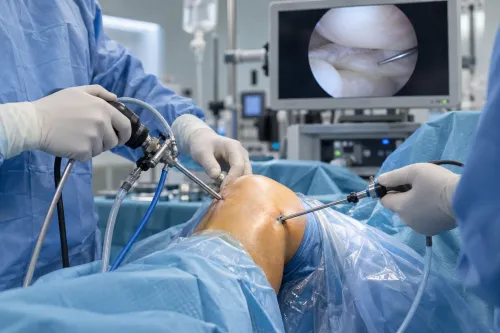
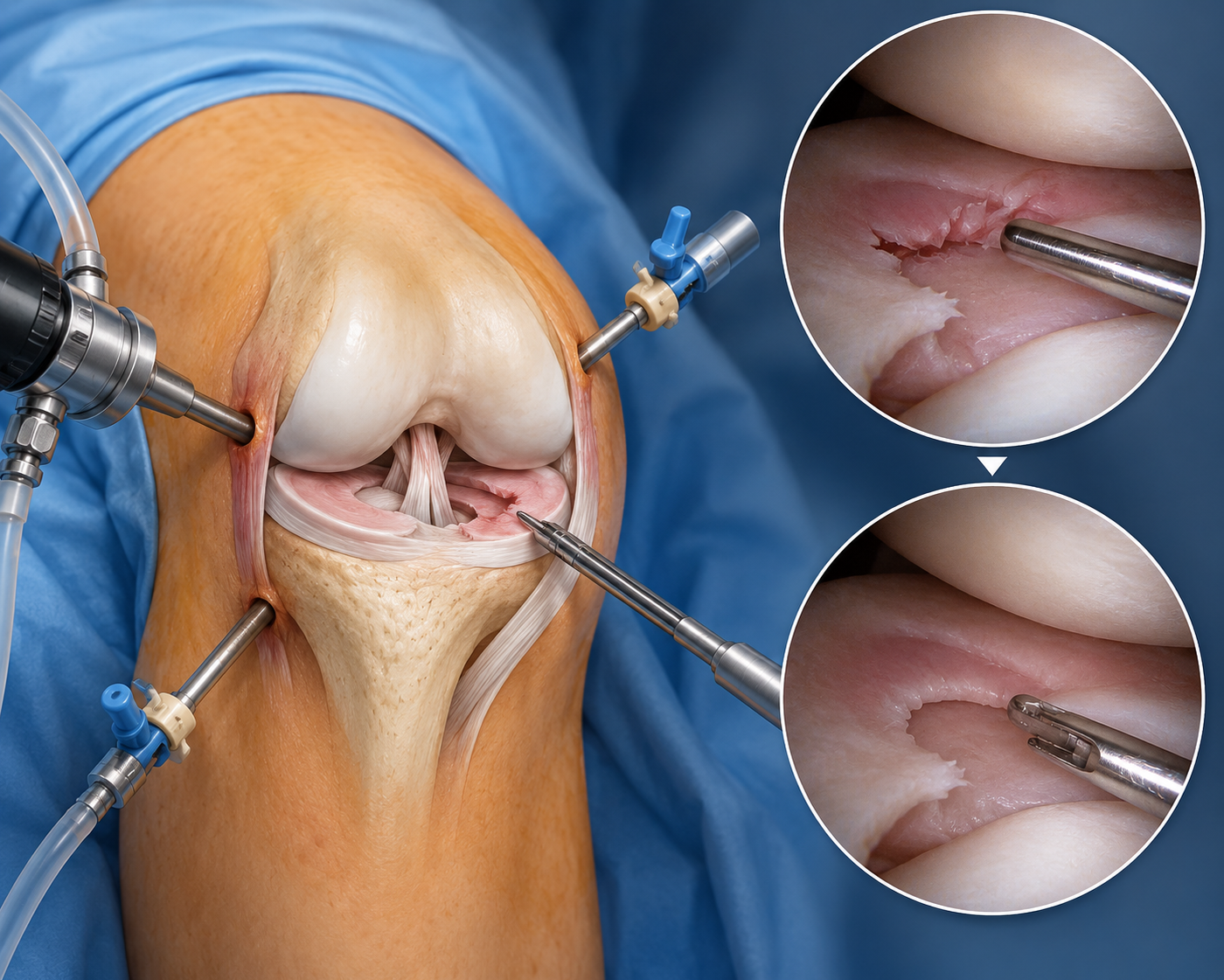
Most procedures are performed arthroscopically using small incisions and specialized instruments.
Depending on the injury, surgeons may:
- Repair the torn cartilage
- Remove unstable damaged tissue
- Preserve as much healthy meniscus as possible
Preserving the meniscus whenever possible supports better long-term joint health.
Recovery After Surgery
Recovery depends on the type of tear and the procedure performed.
Rehabilitation commonly focuses on:
- Controlling swelling
- Restoring knee movement
- Strengthening muscles
- Improving balance
- Gradually returning to sports or work
Following the rehabilitation plan carefully reduces the likelihood of future knee problems.
Specialized Knee Care in Noida
Sports participation, active lifestyles, and increasing fitness awareness have led to more knee injuries among residents of Noida. Early diagnosis helps prevent prolonged pain and additional cartilage damage.
Dr. A.K. Sharma, Ortho and Joint Replacement Surgeon assesses meniscus injuries using detailed clinical evaluation and modern imaging before recommending conservative care or arthroscopic surgery. Individualized treatment plans aim to restore knee function while protecting long-term joint health.
Ignoring persistent knee symptoms may increase the risk of further damage. Early evaluation helps patients choose the most appropriate treatment before the injury begins affecting everyday mobility.