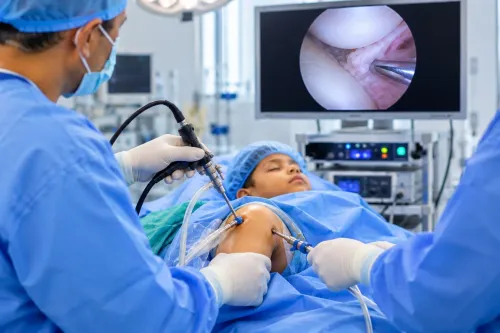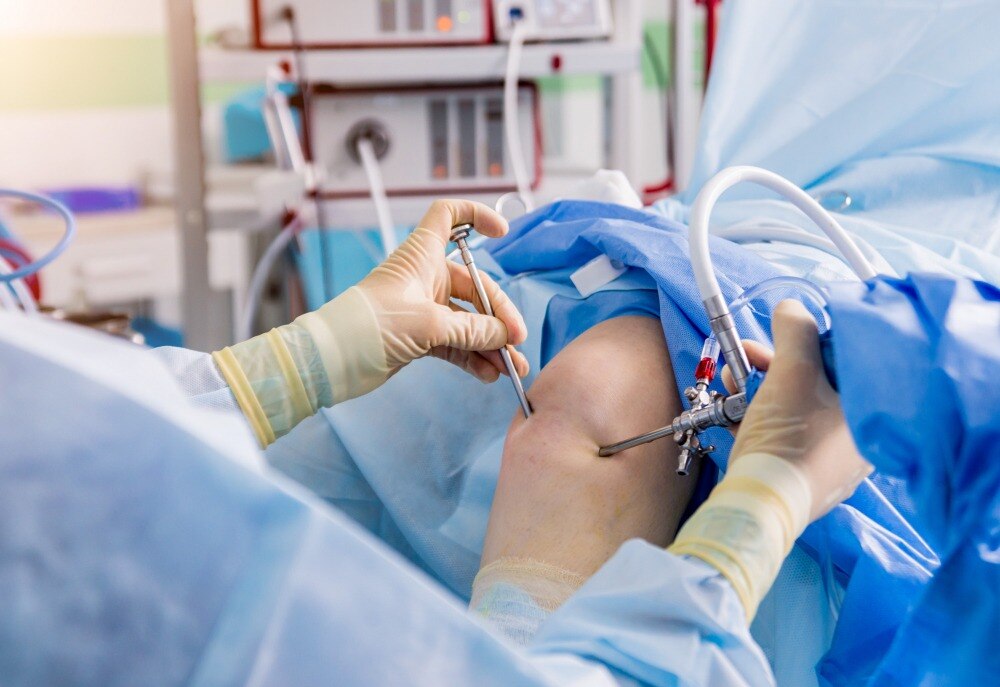
Arthroscopy fits a specific mechanical or structural joint problem, not every instance of pain, stiffness or an abnormal scan. By the end, you will know which symptoms, examination findings and imaging results support it, how options differ by joint, and when physiotherapy, open surgery or joint replacement makes more sense.
Key takeaways
- Choose arthroscopy when imaging and examination identify a treatable structural problem.
- Match the procedure to the joint and problem, such as a torn meniscus or labrum.
- Try physiotherapy or injections when symptoms do not require structural repair.
- Ask about diagnosis, alternatives, risks, recovery and the surgeon’s relevant experience.
What findings make arthroscopy a reasonable recommendation?
Arthroscopy is reasonable when your symptoms, examination, imaging and response to non-surgical care point to a treatable structural problem, not simply because the operation is called minimally invasive.
Findings that strengthen the recommendation include:
- Persistent catching, locking, giving way or pain linked to a specific movement after an appropriate period of activity modification, physiotherapy or medication.
- Examination findings that reproduce the complaint, such as joint-line tenderness, restricted motion, instability or measurable weakness.
- An MRI, CT scan or X-ray showing a lesion that arthroscopy can repair or remove, such as a meniscus tear, loose body, ligament injury or selected cartilage problem.
- Symptoms that remain significant despite a properly followed non-operative plan, with the proposed procedure offering a clearer benefit than continued observation, injection or open surgery.
A scan alone is not enough. Age-related rotator-cuff tears and cartilage changes can exist without causing the pain, so the image must match your symptoms and examination. For knee osteoarthritis, arthroscopic washing or trimming is not routinely recommended; advanced joint-space loss and severe pain usually require non-operative care or discussion of replacement instead.
A search for “when is arthroscopy for recommended in Noida” should therefore lead to a diagnosis-based consultation, not a location-based promise. Ask what finding the procedure will correct, what happens if you choose physiotherapy or an injection, and what complication or failed-repair risk applies to your specific joint.
Which joint arthroscopy options match common problems?
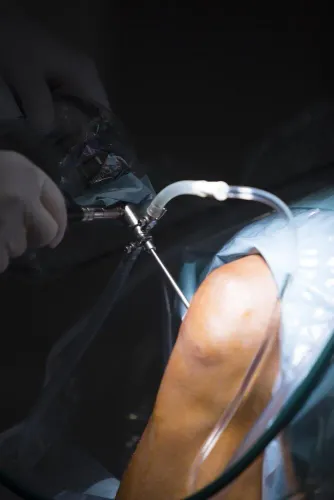
The joint arthroscopy options depend on the structure causing your symptoms, not simply on which joint hurts. A camera can inspect the joint for diagnosis, while separate instruments can repair, reconstruct or remove tissue during the same procedure.
| Joint | Problems surgeons may treat | Procedure purpose |
|---|---|---|
| Knee | Meniscus tear, ACL injury, loose body, selected cartilage damage | Repair, reconstruction, removal or inspection |
| Shoulder | Instability, labral tear, selected rotator-cuff tear, inflamed tissue, bone spur | Stabilisation, repair, tissue or spur removal |
| Hip | Labral injury, femoroacetabular impingement, loose body, selected cartilage damage | Labral repair, reshaping, removal or inspection |
| Ankle | Impingement, loose body, cartilage injury, inflamed lining | Debridement, removal, cartilage treatment or diagnosis |
| Elbow | Loose body, inflamed lining, stiffness from scar tissue | Removal, tissue clearance or joint inspection |
| Wrist | Triangular fibrocartilage complex injury, ligament damage, cartilage problems | Repair, debridement or diagnosis |
A diagnostic arthroscopy answers what is happening inside the joint; it does not automatically fix the problem. Repair aims to preserve tissue, while debridement or removal takes away damaged tissue that causes catching, locking or inflammation. Those choices affect rehabilitation and long-term joint function.
The arthroscopy benefits include smaller skin incisions and less disruption to surrounding tissue than many open operations, but they do not guarantee lasting pain relief. A scan finding alone is not enough: an age-related rotator-cuff tear, for example, must match weakness, pain, injury history and failed non-operative care.ಿಕ್ಷ
When is physiotherapy, injection or replacement a better fit?
A repairable structural problem supports arthroscopy when your symptoms, examination and scan point to one specific cause. Examples include a repairable meniscal tear, loose body, selected cartilage injury, shoulder instability or a ligament problem. The goal must be clear: repair, reconstruction, tissue removal or diagnosis—not simply “cleaning” an ageing joint.
Arthroscopy benefits include smaller incisions and less disruption of surrounding tissue in some operations, but they do not guarantee better long-term pain or function.
| Option | Better fit | Why |
|---|---|---|
| Physiotherapy or observation | Age-related wear, mild symptoms or manageable function | Builds strength and movement without surgical risk |
| Injection | Pain that limits rehabilitation or activity | Can reduce symptoms temporarily but does not restore lost cartilage |
| Open fixation | Some fractures or injuries needing direct alignment | Plates, screws or grafts may be necessary |
| Joint replacement | End-stage osteoarthritis with severe pain, major disability and severe joint-space loss | Replaces damaged joint surfaces rather than treating one internal defect |
Infection needs prompt medical assessment and targeted treatment; arthroscopy is not an automatic solution. For knee osteoarthritis alone, NICE recommends against arthroscopic lavage or debridement because it offers no clinically important advantage over non-surgical care.
Do not treat an MRI finding by itself: age-related tears or cartilage changes matter only when they match your symptoms and examination.
How does arthroscopy compare with open surgery and recovery?
Arthroscopy usually uses two or more small portals, but the operation can still require substantial healing. Arthroscopy versus open surgery is not a contest decided by incision length: the safer choice depends on which tissues must be reached and repaired.
| Feature | Arthroscopy | Open surgery |
|---|---|---|
| Joint access | Camera and instruments reach selected areas through portals; visibility is magnified but access is limited | A larger incision gives direct exposure for extensive reconstruction, large fractures, major deformity or some tumours |
| Anaesthesia and stay | General, regional or local anaesthesia; often day-case or short-stay | The same anaesthesia options; hospital admission is more likely when the procedure is extensive |
| Wound care and pain | Small dressings and stitches; pain may be lower for some procedures | Larger wound care; soft-tissue disruption can increase early pain |
| Complications | Infection, bleeding, clots, nerve or blood-vessel injury and fluid swelling remain possible | The same risks, plus greater wound and soft-tissue demands in some operations |
| Rehabilitation and return | Timing depends on whether tissue was inspected, removed or repaired | Often longer after extensive exposure, but a well-chosen open repair can restore function better |
Small portals do not guarantee a short recovery. An ACL reconstruction, rotator-cuff repair or labral repair needs graft or tendon healing, so you may need a brace, crutches, restricted lifting and months of rehabilitation. Return to desk work, physical work, driving and sport must follow the repair and strength milestones—not the camera’s size.
A simple loose-body removal may recover faster; advanced arthritis will not be reversed by keyhole surgery.
How should you choose an arthroscopy specialist in Noida?
Choose an arthroscopy specialist in Noida who can match the proposed operation to your diagnosis, activity goal and medical fitness—not simply to a scan finding or the promise of small incisions. A consultation with Dr.A.K.Sharma-Ortho & joint replacement surgeon should leave you with specific answers, not “minimally invasive” as the main justification.
Ask these questions:
- What is the exact diagnosis from my symptoms, examination and imaging?
- Is the goal to diagnose, repair, remove damaged tissue or reconstruct a ligament?
- What happens if I choose physiotherapy, an injection or observation instead?
- For this specific repair, what is the success rate, and what happens if it fails?
- What are the infection, clot, stiffness, nerve, blood-vessel and anaesthetic risks?
- How many weeks until driving, desk work, heavy work and my sport?
- Could this condition later require knee or hip replacement, and does this operation change that risk?
Match the recommendation to the problem:
| Option | Check before choosing | Main concern |
|---|---|---|
| Physiotherapy or observation | Symptoms are manageable and no urgent structural problem exists | Delay can prolong disability |
| Arthroscopy | A repairable tear, loose body, instability or impingement matches the examination | Small portals do not mean a short rehabilitation |
| Open fixation | A fracture or reconstruction needs direct access | Larger wounds and longer recovery |
| Joint replacement | Advanced arthritis has severe joint-space loss and persistent disability | It replaces the damaged joint rather than preserving it |
For knee osteoarthritis alone, ask why arthroscopy is being proposed; NICE recommends against routine lavage or debridement because it offers no clinically important benefit over non-surgical care.
Related service
Arthroscopy Minimally Invasive Solutions: Advanced Arthroscopy Surgery in Noida At Global Orthopaedics and Speciality Clinics in Noida, we offer advanced... |
Frequently asked questions
When is arthroscopy recommended in Noida?
Arthroscopy is reasonable when your symptoms, examination and imaging identify a treatable structural problem, especially after appropriate non-surgical care has not worked.
What joint arthroscopy options match common problems?
Knee arthroscopy can address selected meniscus, cartilage and ligament problems; shoulder arthroscopy can treat certain labral, rotator cuff and instability conditions. Hip, ankle, elbow and wrist procedures require joint-specific assessment.
When is physiotherapy, an injection or joint replacement better than arthroscopy?
Physiotherapy fits many movement, strength and rehabilitation problems. An injection can help manage inflammation or pain in selected conditions. Joint replacement is considered when severe arthritis has damaged the joint and conservative treatment no longer provides adequate function.
How does arthroscopy compare with open surgery?
Arthroscopy uses small incisions and a camera, while open surgery uses a larger incision to expose the joint. The better option depends on the structure needing treatment, the injury, surgical access and the surgeon’s assessment.
How should you choose an arthroscopy specialist in Noida?
Ask how the diagnosis was confirmed, which alternatives fit, what the procedure will address, expected rehabilitation, risks, follow-up and the surgeon’s experience with your specific joint problem.
Keywords