High heat, humidity and heavy sweating can make rehabilitation harder by increasing fatigue, dehydration and coordination problems, even though summer does not directly repair or damage a ligament, tendon or fracture. You will learn how to schedule and modify sessions, manage swelling and equipment, recognise heat illness, and identify signs that an injury needs medical review.
Key takeaways
- Schedule rehabilitation during cooler hours and take planned rest breaks.
- Drink regularly, but do not treat worsening pain as simple heat stress.
- Keep braces, tape and dressings dry, secure and protected from sweat.
- Seek assessment for increasing swelling, weakness, numbness or loss of function.
How Noida’s heat changes sports injury recovery
So, does summer heat affect sports injury for recovery in noida? Yes, mainly by making rehabilitation harder to perform safely, not by directly speeding up or slowing ligament, tendon, muscle or bone repair.
High temperature, humidity and outdoor exposure increase sweating and cardiovascular strain, so the same exercise can produce more fatigue, pain and loss of coordination.
- Your body sends more blood to the skin for cooling, leaving less capacity for demanding strength, balance or running drills.
- Fluid loss reduces exercise tolerance; dehydration can make muscles feel heavy and movements less precise.
- Heat and sweat can amplify discomfort around a swollen joint, especially after outdoor activity or a long session.
That is why sports injury recovery in summer often requires an earlier appointment, an indoor or well-ventilated setting, longer rest intervals and lower intensity rather than stopping all movement. Early-morning or evening rehabilitation is usually easier than peak afternoon training, but outdoor heat exposure still needs gradual adjustment.
Heat acclimatisation over roughly 7–14 days can improve tolerance; it does not prove that an injured athlete is ready to return.
Do not assume hot weather makes external heat suitable for a fresh injury. Applying heat to a newly swollen area can worsen discomfort or swelling; later, it may ease stiffness temporarily, but it cannot repair torn tissue.
Separate heat stress from an injury that is getting worse
Heat stress usually causes whole-body symptoms that build during or soon after exercise. An injury that is worsening produces focused changes around the affected joint, muscle, tendon or ligament. One practical piece of exercise injury recovery advice is to check symptoms during the session, again after cooling down, and the next morning.
| Feature | More consistent with heat stress | More consistent with worsening injury |
|---|---|---|
| Symptoms | Headache, nausea, dizziness, unusual weakness, heavy sweating or feeling faint | Increasing pain at the injured area, new swelling, reduced movement, a limp or loss of strength |
| Timing | Starts as heat exposure and exertion rise, then improves with rest, cooling and fluids | Persists after rest or returns with less activity than before |
| Function | Poor concentration, unsteady movement or reduced exercise tolerance throughout the body | New instability, inability to bear weight, altered technique or failure to complete a familiar drill |
| Next day | Normal recovery after cooling and rehydration | More pain, stiffness, swelling or reduced range of motion the following day |
Stop exercising if you develop dizziness, nausea, weakness, headache or heavy sweating. Move to a cool place, loosen clothing and cool your body; confusion, collapse, seizure or loss of consciousness requires urgent emergency help.
Reduce the recent training load and arrange reassessment when pain, swelling, instability, weight-bearing ability or range of motion is getting worse. Do not blame those changes on summer heat alone.
Plan safer rehabilitation sessions, hydration and swelling control
Choose early morning, evening or an air-conditioned, well-ventilated room for sports injury recovery in summer. Avoid peak afternoon heat, especially for balance drills, running and strength work. Start at the planned rehabilitation intensity, then reduce resistance, repetitions or speed and add longer rest when sweating, fatigue or coordination worsens.
| Setting | Best use | Adjustment |
|---|---|---|
| Early morning or evening | Walking, running progression, outdoor drills | Stop if heat and humidity remain high |
| Indoor, temperature-controlled room | Strength, mobility and balance work | Keep airflow moving; avoid a crowded space |
| Hot outdoor session | Only when no cooler option exists | Shorten intervals, lower intensity and stay near shade and water |
For exercise injury recovery advice, drink water before the session, take small drinks during it, and replace fluids afterward. An electrolyte drink is useful after heavy sweating, prolonged exercise or visible salt on clothing; plain water suits a short, light session. Do not force large volumes quickly.
Wear loose, light-coloured, breathable clothing and shoes that remain secure when damp. Keep a towel available so sweat does not affect grip. Use a cold pack wrapped in cloth for 10 to 15 minutes after exercise if swelling or discomfort rises; never place ice directly on skin.
Elevate the injured limb after training and use compression only if it has been recommended for your injury. Check symptoms later that day and the next morning. More swelling, pain, stiffness, limping or reduced movement means the session exceeded current tolerance; reduce the next load and seek clinical advice if it persists.
Protect braces, tape, dressings and the return-to-sport progression
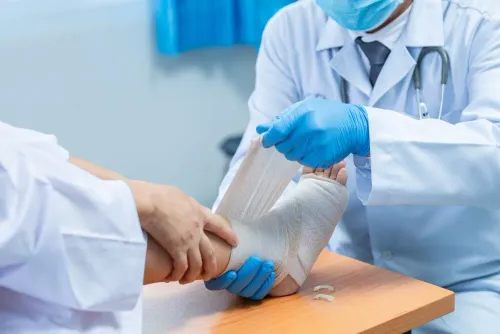
Sweat can loosen adhesive tape, soften brace straps and trap moisture against the skin. That reduces support, increases rubbing and can cause a rash or blister over an already sensitive area. Remove wet tape as directed, dry the skin fully, and check that a brace still holds the joint without numbness or slipping.
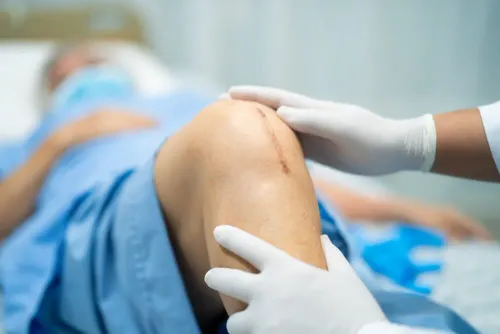
Keep an incision or open wound covered exactly as your treating clinician instructed. Replace a soaked or dirty dressing with the prescribed dressing, and do not swim or soak after surgery until the wound has healed and the surgical team permits it.
Progress from rehabilitation to sport in stages, not by the calendar:
- Begin running only after walking, strength work and single-leg control are pain-controlled, without increased swelling later that day or the next morning.
- Add short walk-jog intervals on a cool indoor track or shaded, level surface. Increase either duration or speed, not both in one session.
- Add sport-specific drills after straight-line running is tolerated; introduce cutting, jumping and reaction work separately before full field play.
- Return to gym training with controlled loads and stable technique. Delay maximal lifts, explosive sets and training to failure until the injured side matches the clinician’s strength and movement targets.
In sports injury rehabilitation in Noida, earlier appointments or an air-conditioned setting can protect coordination when heat makes you unusually fatigued. Do not use heat acclimatisation as permission to skip return-to-sport testing.
When summer symptoms require a sports injury assessment
If pain, swelling or function is worse the next morning—not only during exercise—stop increasing the load and arrange an assessment. Repeated icing to keep training can hide a worsening injury; ice wrapped in a cloth is temporary symptom control, not a diagnosis.
See a sports injury doctor in Noida promptly when any of these occur:
- Pain increases with ordinary walking, the limp worsens, or you lose range of motion.
- Swelling continues to expand, returns quickly after activity, or the joint feels unstable or gives way.
- You cannot bear weight, or pain follows a high-energy collision, fall or twisting injury.
- The joint looks deformed, or the limb becomes numb, cold or pale.
- Headache, nausea, dizziness, unusual weakness or heavy sweating does not settle after stopping, resting and cooling down.
Confusion, collapse, a seizure or loss of consciousness is an emergency. Stop exercise, move the person to a cool place, begin urgent cooling and seek emergency medical help.
Dr.A.K.Sharma-Ortho & joint replacement surgeon can help determine whether the next step is imaging, protection, staged loading or a revised exercise plan. Effective sports injury rehabilitation in Noida should reflect your diagnosis, outdoor exposure and heat tolerance—not use summer to rush recovery or abandon movement entirely.
Related service
Get Back in the Game: Expert Sports Injury Treatment in Noida Are you a athlete sidelined by a sports injury? At Global Orthopaedics and Speciality... View service → |
Frequently asked questions
Does summer heat affect sports injury recovery in Noida?
Yes. Heat mainly makes rehabilitation harder to perform safely through dehydration, fatigue, increased discomfort and difficulty controlling swelling. It does not directly determine how quickly a ligament, tendon, muscle or bone repairs.
How can you separate heat stress from a sports injury getting worse?
Heat stress causes symptoms such as heavy sweating, dizziness, headache, nausea, unusual fatigue or confusion. Worsening injury signs include increasing pain, swelling, bruising, instability, weakness, numbness or reduced movement. Stop exercising and seek medical advice for severe or persistent symptoms.
How should you plan sports injury rehabilitation in Noida’s summer heat?
Use cooler morning or evening sessions, reduce intensity when fatigue changes your technique, take scheduled breaks and drink fluids regularly. Follow the prescribed exercises and use elevation, compression or ice only as directed for swelling control.
When should you see a sports injury doctor in Noida?
Arrange an assessment when pain or swelling increases, the joint gives way, you cannot bear weight, movement declines, or symptoms continue after rest. Seek urgent care for deformity, severe pain, loss of sensation, or a suspected fracture.
Keywords