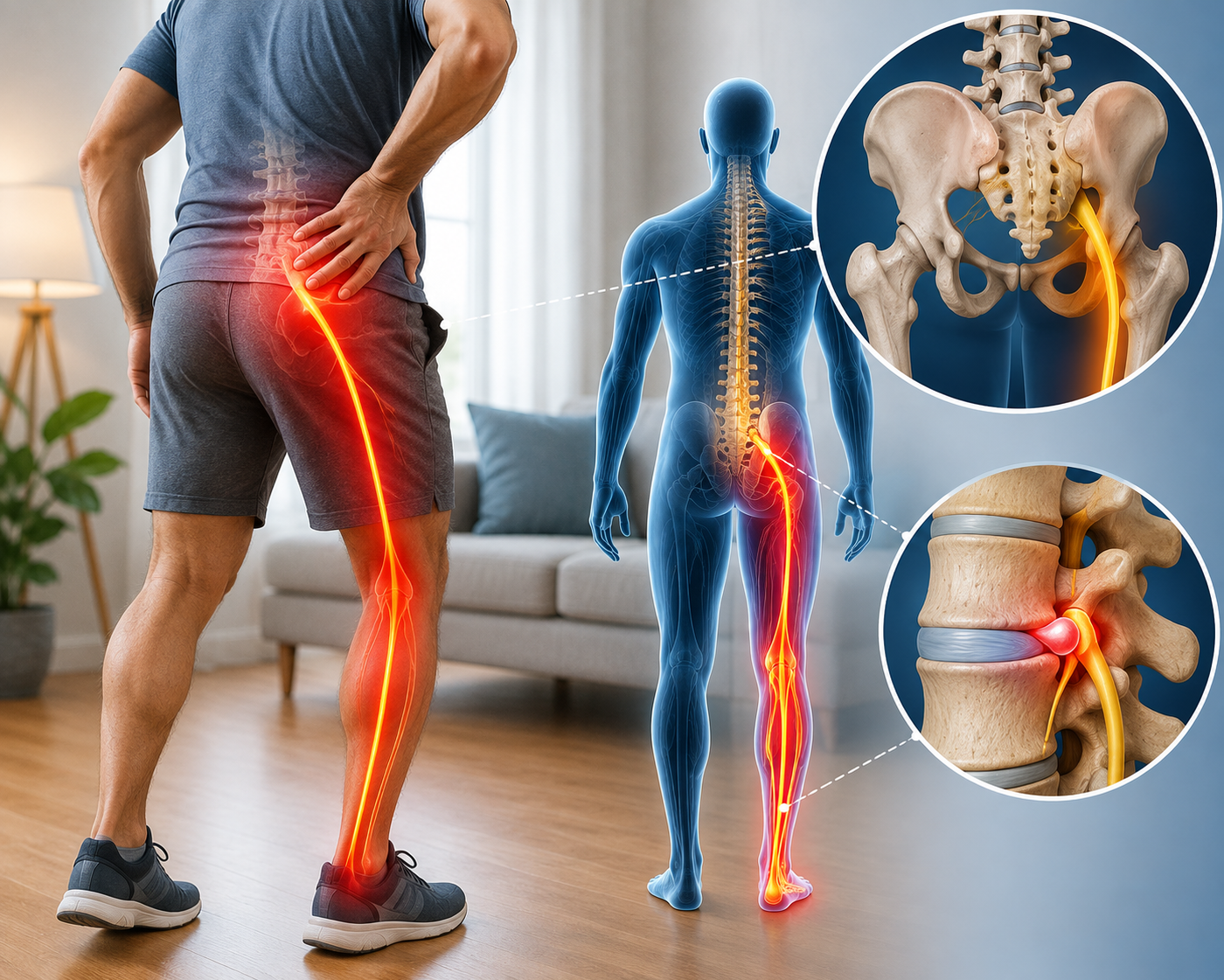
Pain that begins in the lower back and travels down one leg is often more than ordinary muscle strain. It may be sciatica, a condition caused by irritation or compression of the sciatic nerve. Because symptoms vary widely from one person to another, many people delay treatment until walking, sitting, or standing becomes increasingly uncomfortable.
Recognizing sciatica nerve pain early allows patients to receive appropriate treatment before symptoms interfere significantly with everyday life.
What Causes Sciatica?
The sciatic nerve is the largest nerve in the human body, extending from the lower spine through the hips and into each leg.
Compression may occur because of:
- Herniated discs
- Degenerative spine disease
- Spinal stenosis
- Bone spurs
- Muscle inflammation
- Previous spinal injuries
Identifying the exact cause is essential because treatment differs depending on the source of nerve compression.
Common Symptoms of Sciatica
Unlike ordinary back pain, sciatica typically follows the path of the affected nerve.
Symptoms may include:
- Pain travelling from the lower back into the leg
- Burning sensation
- Tingling
- Numbness
- Leg weakness
- Pain while sitting
- Difficulty standing for long periods
- Sharp pain during coughing or sneezing
Symptoms often affect only one side of the body.
Diagnosing the Underlying Problem
Effective treatment begins with an accurate diagnosis.
Evaluation may include:
- Medical history review
- Physical examination
- Neurological assessment
- Muscle strength testing
- MRI imaging when necessary
- X-rays in selected cases
Understanding whether the nerve is compressed by a disc, arthritis, or another condition helps determine the most appropriate treatment.
Non-Surgical Treatment Options
Many patients recover successfully without surgery.
Treatment commonly involves:
- Physiotherapy
- Anti-inflammatory medication
- Guided stretching exercises
- Activity modification
- Core strengthening
- Posture correction
- Weight management
Remaining moderately active, rather than prolonged bed rest, is often recommended under medical supervision.
Simple Habits That Help Prevent Recurrence
Once symptoms improve, healthy spinal habits help reduce future episodes.
Patients should consider:
- Maintaining good posture
- Exercising regularly
- Strengthening abdominal muscles
- Avoiding heavy lifting without proper technique
- Taking breaks from prolonged sitting
- Maintaining a healthy body weight
These measures reduce pressure on the lower spine and improve overall spinal stability.
When Is Surgery Considered?
Surgery is reserved for selected patients when conservative treatment does not provide adequate relief or when significant neurological symptoms develop.
Possible indications include:
- Progressive muscle weakness
- Persistent severe pain
- Loss of bladder or bowel control requiring emergency care
- Significant nerve compression confirmed through imaging
- Failure of prolonged conservative treatment
Most patients improve without surgical intervention when treatment begins early.
Specialized Sciatica Care in Noida
Lower back disorders have become increasingly common among office workers, drivers, and physically active individuals across Noida. Early orthopedic evaluation helps identify the cause of nerve irritation before chronic symptoms limit mobility.
Dr. A.K. Sharma, Ortho and Joint Replacement Surgeon provides comprehensive assessment for patients experiencing sciatica symptoms, developing individualized treatment plans that focus on relieving nerve compression, restoring movement, and improving long-term spinal health.
Persistent pain travelling from the back into the leg should never be ignored. Early diagnosis and appropriate treatment can significantly improve recovery while helping patients return to comfortable daily activities.